Spunlace — also called hydroentanglement — is a nonwoven process that bonds a fibre web using rows of high-pressure water jets fired through the web, twisting and hooking the fibres tightly into each other to form fabric. The bond is purely mechanical: no adhesive, no heat, which is why the finished fabric is soft, absorbent and clean. Where needle punch drives barbed needles through the web, spunlace uses water, so the fibre structure survives essentially intact.
The principle: water instead of needles or heat
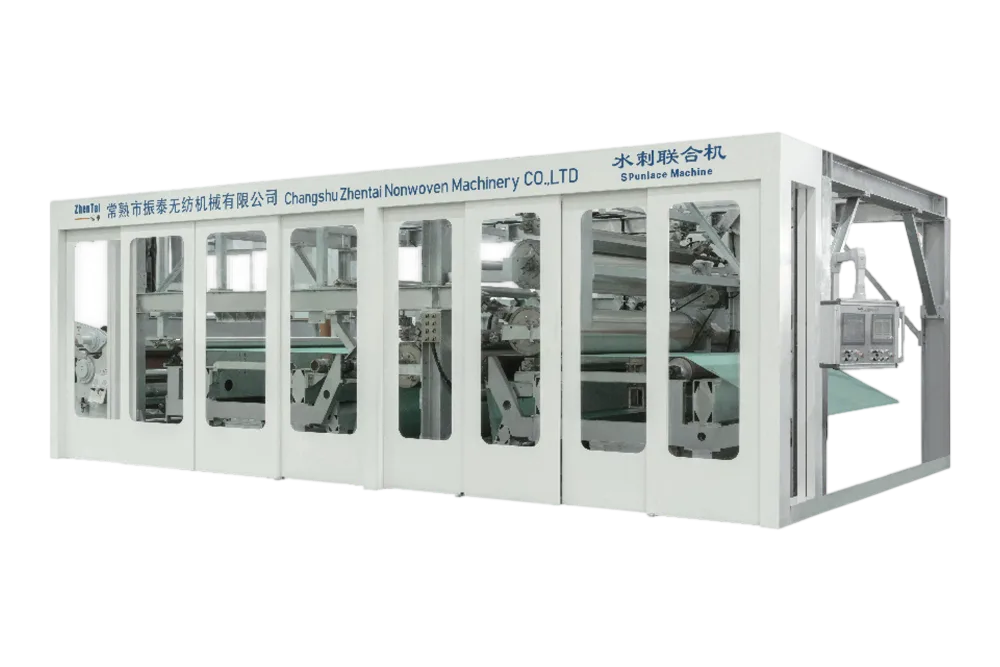
Spunlace answers the same question as needle punch — how to turn a loose sheet of fibre into fabric with real tensile strength — but with a different agent. The carded web is pre-wetted to drive out air so the jets penetrate instead of tearing it apart, then travels on a mesh drum beneath banks of water-jet heads: the jets pass through the web, strike the support mesh and reflect back, twisting the fibres and locking them together. Vacuum boxes then pull the water out, a dryer removes the rest, and the fabric is wound.
What makes that step work is the reflection force of the support mesh — so the mesh construction is no minor detail. Zhentai’s spunlace machine is built on a reverse pre-wet “three-roller + platform” structure, and its three-turn drum can be made of nickel mesh or stainless steel mesh, the two nets being exchangeable according to the process — giving strong reflection force, a powerful tangling effect and good cloth quality. It is available in 2500mm, 3000mm and 3600mm widths at a mechanical speed of up to 120m/min.
The spunlace head: where fabric appearance is decided
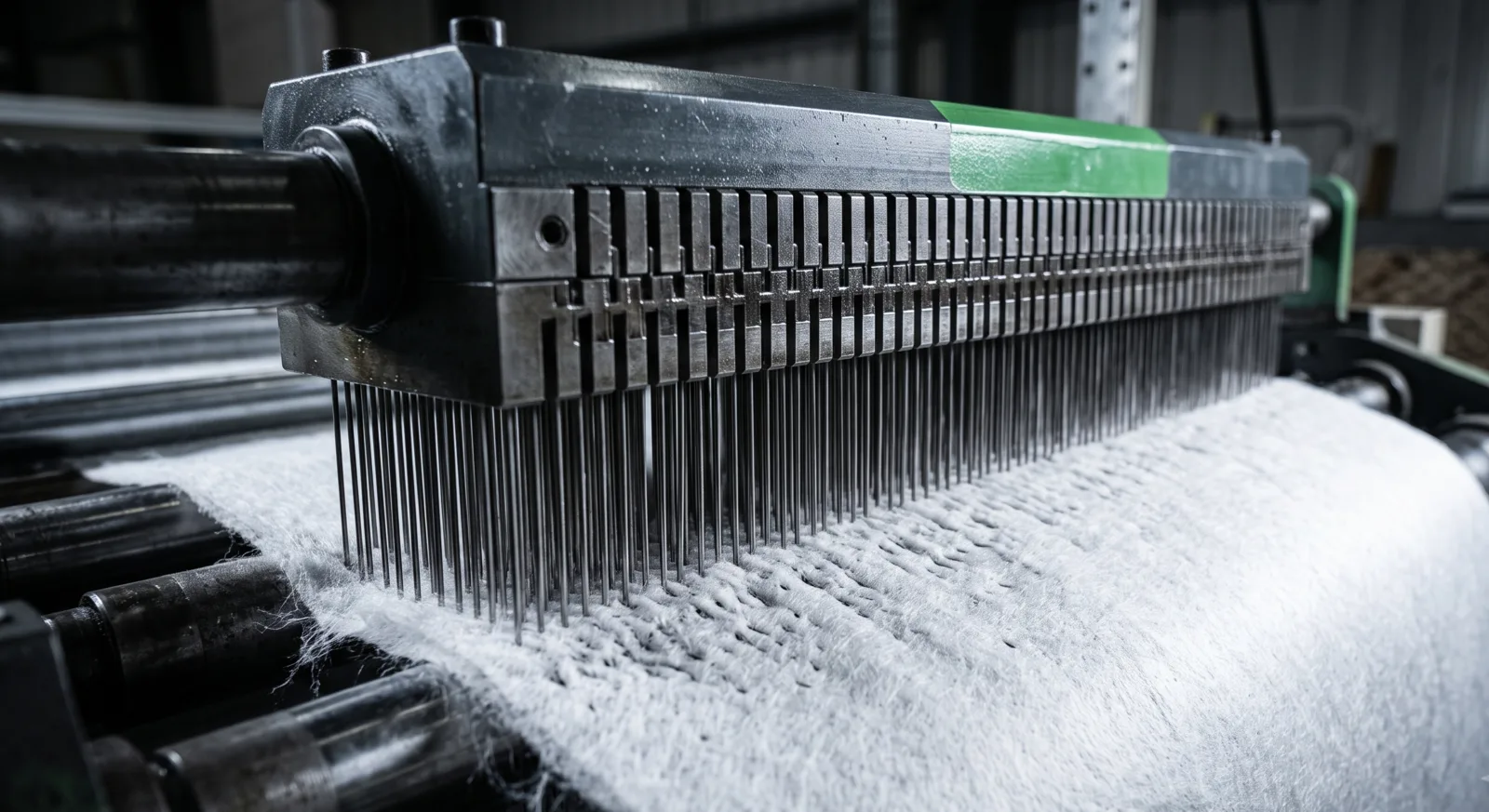
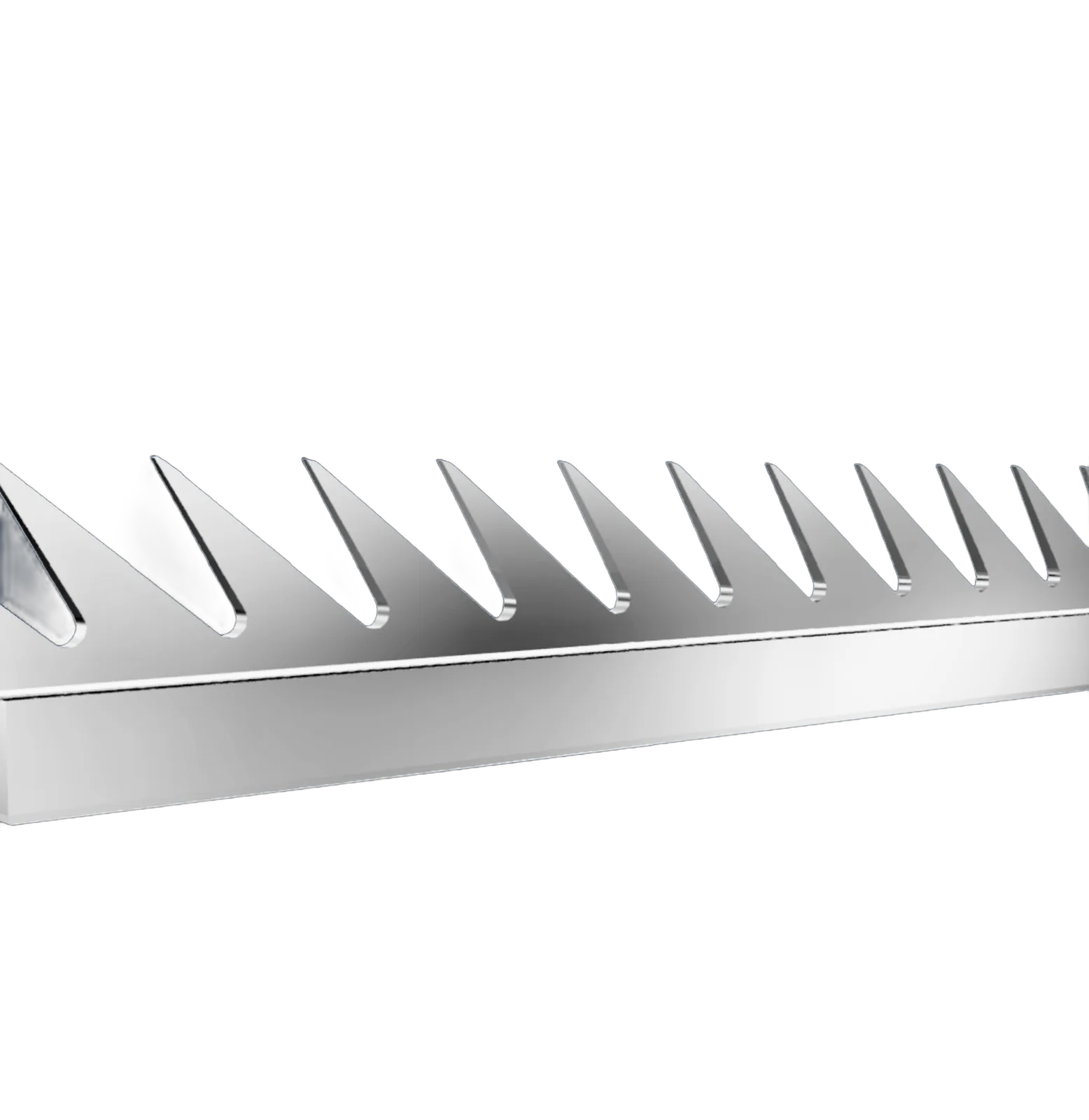
The spunlace head is the heart of the line. Inside each head sits a jet strip — a metal plate drilled with a dense row of very fine orifices running the full working width, turning high-pressure water into a continuous curtain of fine, coherent jets. Two things govern fabric quality here:
- Jet uniformity across the width. A single orifice that plugs up, or wears oversize, prints a stripe running the entire length of the roll — a defect no downstream station can rescue.
- Manifold layout and per-bank pressure. Pressure is staged along the machine direction: the first bank only tacks the fibres together, later banks tighten the bond. Too much at the first bank tears the web; too little at the last leaves the fabric short of strength.
The jet strip therefore belongs on the consumables list, tracked the way felting needles are tracked on a needle-punch line.
The water-treatment loop: most of the real cost of ownership
This is the line item projects most often under-budget. Water on a spunlace line is not a consumable — it is a closed loop that has to be operated: water leaving the web carries fibre fines, spin finish and dust with it, and has to be vacuumed off, filtered, treated and returned to the high-pressure pumps.
Zhentai’s water-treatment system comprises two assemblies: the high-pressure water supply (高压供水系统), which pumps and regulates clean process water and holds pressure steady for the manifolds; and the water jet head (水刺头), which distributes the jets evenly across the full fabric width.
In spunlacing, the quality and stability of the process water directly govern how even the fabric surface is: dirty water blocks orifices, and fluctuating pressure makes fabric strength drift metre by metre. So when comparing capital costs, budget for three items needle punch simply does not have — electricity for the high-pressure pumps, electricity for drying, and filtration/water-treatment cost (filter media, chemicals, fibre-sludge disposal). The hidden part of a spunlace investment lives in the utilities, not in the machine frame.
Spunlace vs needle punch
Both are mechanical bonds and neither uses glue — but they produce two different families of fabric.
| Criterion | Spunlace (hydroentanglement) | Needle punch |
|---|---|---|
| Bonding agent | High-pressure water jets | Barbed needles |
| Fabric softness | Very soft, smooth, good drape | Firm, coarser hand |
| Effect on the fibre | Fibres twist and hook, little breakage | Needles drag fibres, can break and scuff them |
| Suitable weight range | Light, thin fabric | Medium to heavy, thick fabric |
| Water demand | Very high, must be recirculated and treated | None at the bonding stage |
| Energy demand | High — high-pressure pumps plus drying | Lower, mainly drive power |
| Main consumables | Jet strips, mesh, filter elements | Felting needles and needle boards |
| Typical products | Wet wipes, cosmetic pads, medical materials | Geotextile, carpet, filter media, automotive |
The four axes buyers care about most:
- Softness — water acts across the whole surface rather than punching localised holes, so from the same fibre spunlace comes out clearly softer and smoother.
- Fibre damage — a barbed needle is dragged through the web by force, so some fibre breakage and surface scuffing is unavoidable; water jets do not cut, so the fabric keeps better absorbency and a cleaner look.
- Fabric weight — past a certain thickness the jets no longer reach through the full depth of the web; for thick, load-bearing fabric only needle punch works, because the needles pass through the entire batt.
- Water and energy — the price of softness: needle punch needs no water, spunlace needs a full high-pressure loop with recirculation, filtration and drying, so energy per kilogram is higher.
Weighing the two dry technologies instead? Read Needle-punch or Spunbond: which nonwoven technology should you choose? — spunlace is the third answer to that same question: needle punch for thick load-bearing fabric, spunbond for thin fabric at volume, spunlace for thin fabric that has to be soft and clean. For the needle-punch process in detail, see the needle-punch nonwoven production process.
What is spunlace fabric used for?
Applications cluster around products that touch skin and have to be clean:
- Wet wipes — the biggest segment: baby wipes, make-up removal wipes, antibacterial wipes.
- Dry wipes — household cloths and lint-free industrial wipes.
- Cosmetic pads — cotton-style removal pads and facial sheet masks.
- Medical materials — gauze, surgical wipes and cleanroom materials, where a binder-free fabric is required.
What these share: the end customer judges the product by hand feel and skin safety — two things a water bond delivers better than a needle or an adhesive bond.
Investing in a spunlace set
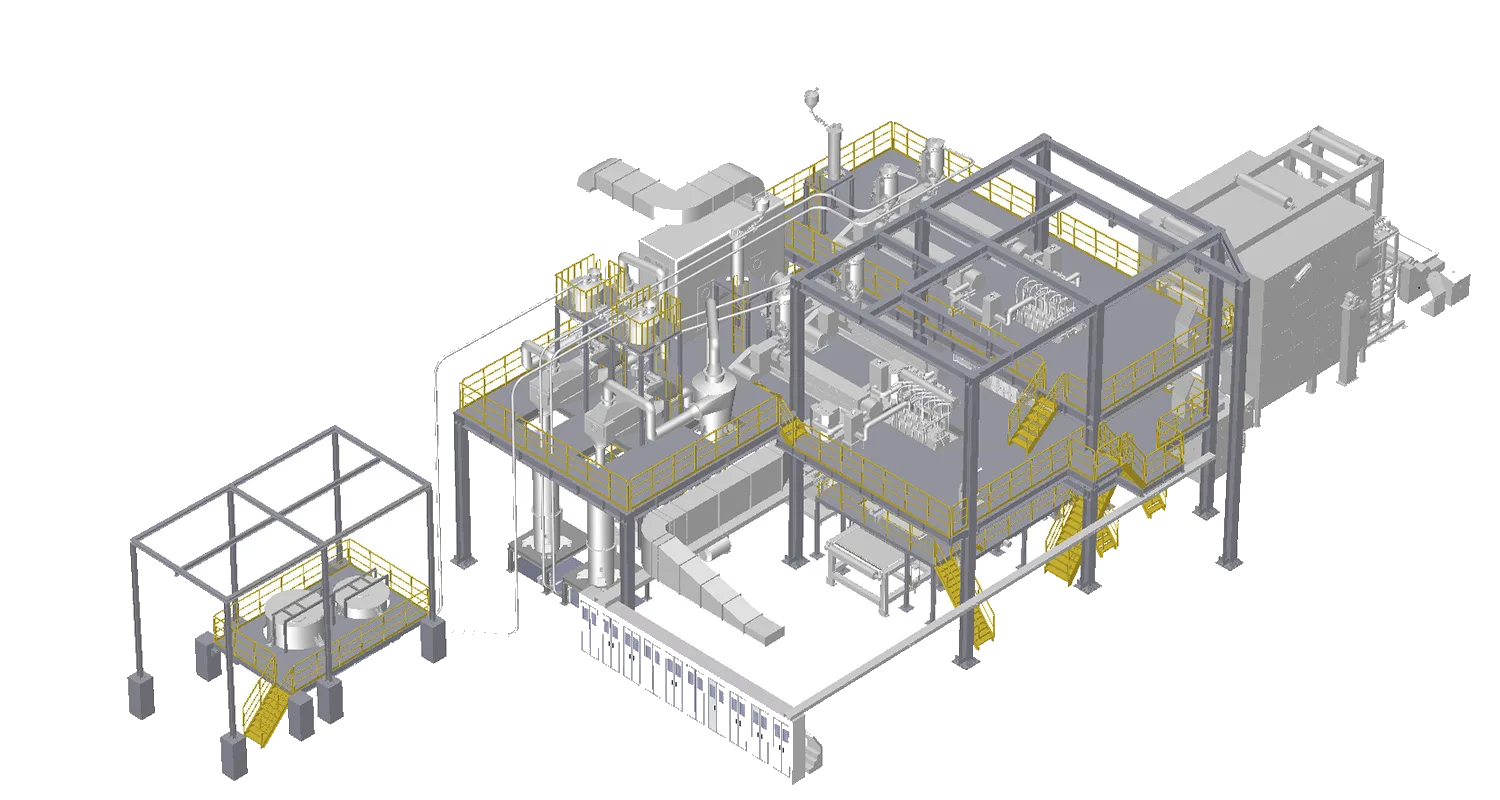
Within the nonwoven lines catalogue, the spunlacing group covers three machines that work as one set: the spunlace machine, the spunlace head and the water-treatment system. Vina Nonwoven is the authorized Zhentai distributor in Vietnam and supports installation, commissioning and warranty.
Still unsure whether hydroentanglement or needle punch fits your product range? Tell the Vina Nonwoven engineering team the product you intend to make, the fabric weight and the output you want — we will advise on the technology, propose an equipment configuration and quote free of charge. Call the hotline or message us on Zalo to get started.