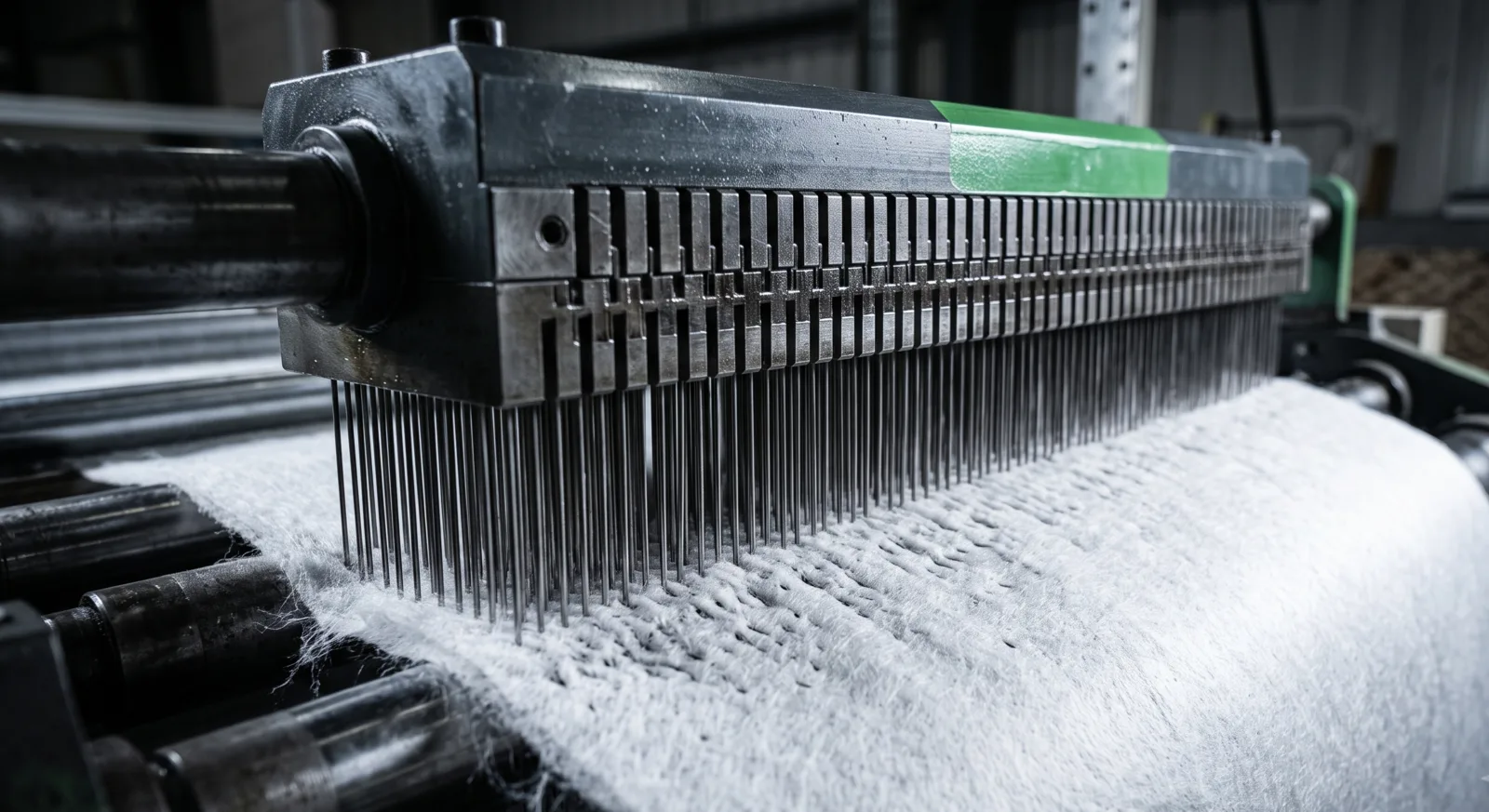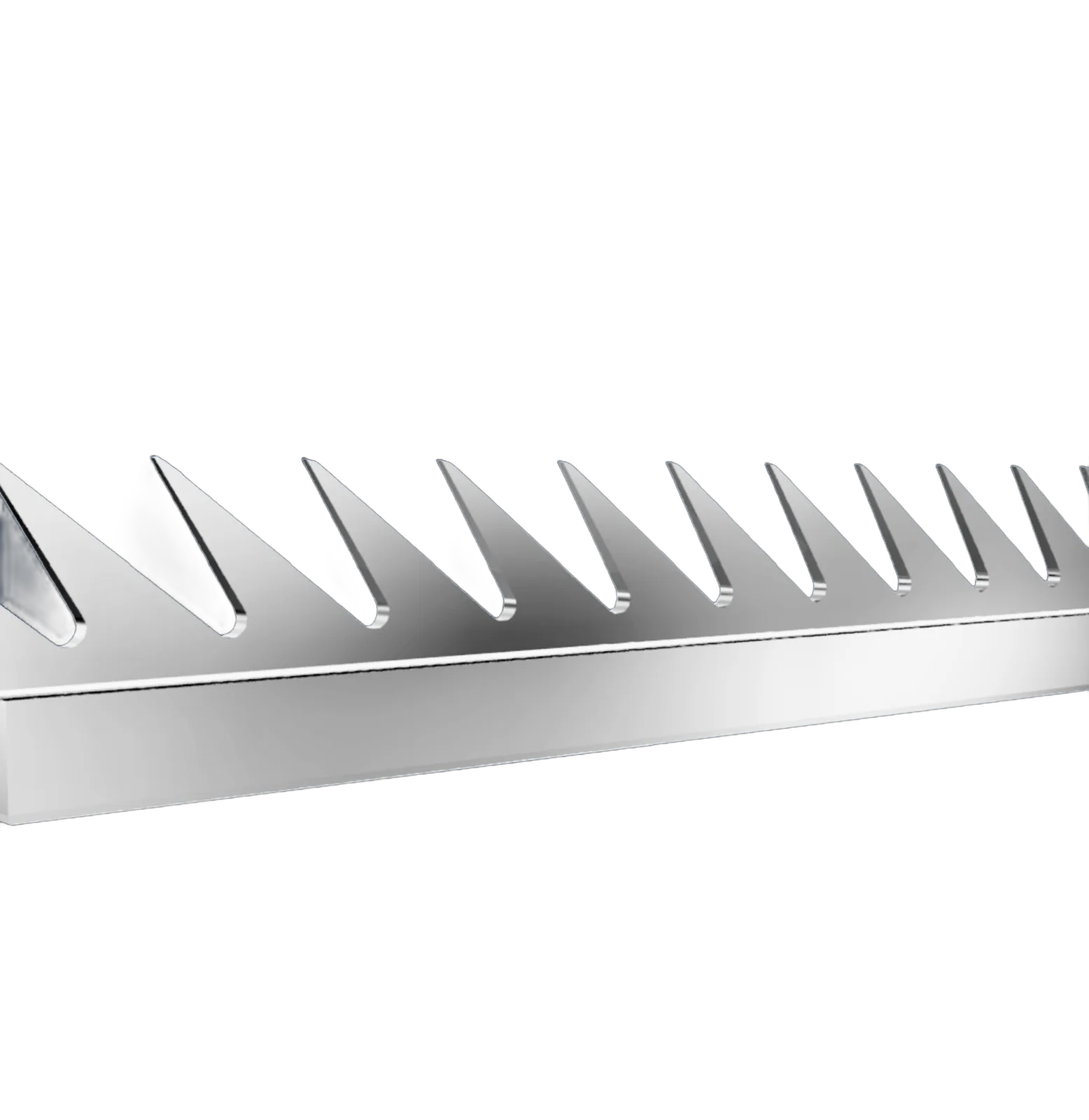
Metal card clothing — metallic wire, or saw-tooth wire — is a strip of alloy steel rolled into a one-piece saw-tooth profile and wound in a tight helix around the cylinder and rollers of a carding machine. That row of steel teeth is what actually opens, separates and parallelises the fibres into a web, which makes it the card’s main working surface rather than an accessory. Every strip has two parts: the rib, which seats flat against the roller, and the tooth, which stands proud and bites into the fibre layer.
Wire geometry: what each parameter governs
Metal card clothing is ordered as a set of geometry parameters, not as a single product name — which is why two strips that look identical can produce two different web qualities.
- Tooth angle / working angle — the angle between the front face of the tooth and the rib. It decides how aggressively the tooth bites, and whether it holds fibre or releases it. A smaller angle leans towards holding fibre and gentle carding; a larger one leans towards strong separation and easier transfer — which is why holding rollers and transfer rollers on the same card carry different angles.
- Pitch — the spacing between consecutive tooth tips along the strip. A finer pitch gives more contact points, closer carding and a finer web; a coarser pitch is more open, clears fibre freely, and suits coarse fibre and heavier weights.
- Tooth depth and total height — total height runs from the base of the rib to the tip, while tooth depth is the fibre-carrying space between two teeth. Tall teeth with deep spaces carry more fibre and reach deeper (long fibre, heavy weights); shorter teeth suit a thin layer and give tighter control.
- Rib thickness and points per square inch (PPSI) — a thicker rib gives rigidity on coarse fibre, while a thinner rib allows a higher PPSI across the same roller width. High PPSI means close carding and a fine web for fine fibre; low PPSI is for long and coarse fibre.
- Surface treatment and coating — this decides how long the tip stays sharp in production. White Shark metal card clothing uses a self-developed special coating holding multiple national invention patents, for durable, wear-resistant teeth.
None of these are chosen in isolation — they are specified as a matched set for the roller position and the fibre. The general parameter list for card clothing is set out in our article on card clothing (carding wire).
Metal vs flexible vs flat card clothing
All three are loosely called “card clothing”, which is where buyers most often mix them up:
| Metal card clothing | Flexible card clothing | Flat card clothing | |
|---|---|---|---|
| Construction | One-piece rolled steel wire, saw-tooth profile | Steel teeth set into a resilient fabric or rubber foundation | Card clothing on flat bars, travelling or stationary |
| Position | Wound helically around the cylinder and rollers | On rollers and flats that need a soft action | Above the cylinder, facing the cylinder surface |
| Carding character | Bites fibre decisively, holds geometry at high throughput | Grips fibre better, less breakage; fine fibre and wool | Fine combing; strips impurities and neps from the web |
| Replacement | Rewind new wire at correct tension and winding pitch | Replaced as a strip on its resilient foundation | Replaced bar by bar; neodymium-magnet versions change by hand |
In short: metal card clothing does the main carding work, flexible clothing is the choice where the fibre needs protecting, and flat clothing is the supplementary surface above the cylinder that cleans the web — a complete card normally runs all three.
The three metal series, and how to choose by fibre
The three series exist because each industry cards a different fibre, with different demands on fineness, staple length and weight:
- Non-woven series — developed specifically for the cards in nonwoven production lines, where large volumes of fibre (synthetic fibre included) must be carded into an even web for cross-lapping and then needle-punching or spunlace. This is the series for PET/PP nonwoven plants, geotextile, carpet and interior-lining work.
- Cotton-spun series — for cotton cards in the cotton-spinning line, fitted at every position: cylinder, doffer, licker-in and roller. What matters here is sharp, durable, wear-resistant teeth that keep sliver and yarn quality stable.
- Woolen series — for wool cards. The wool line covers cylinder and doffer clothing; the cashmere line is more complete, covering the cylinder, opening roller, work roll, peeling roll, transfer roll, work-roll doffer and licker-in roller. Teeth are gentle and durable so fine wool fibre survives carding.
Heavy-weight synthetic and recycled fibre point to the non-woven series; short cotton staple that must yield an even sliver points to the cotton-spun series; fine, breakage-prone wool and cashmere point to the woolen series. If one card runs several fibres, specify for the fibre that occupies most of your production hours. The full range is listed under card clothing.
Wear, grinding and replacement
Metal card clothing is a consumable: tips wear with machine hours, and how the wire separates, holds and releases fibre changes before any defect is visible on the fabric.
- Signs it needs attention: the web is no longer even and shows heavy and light streaks across the width; neps increase; more fibre laps around the rollers than usual; inspection shows tips flattened or bent.
- Grinding and replacement: while the teeth still have enough height, grinding restores the tip — with the correct method and the card maker’s instructions, since over-grinding removes tooth height and changes the carding character with it. Once wear passes the limit, or teeth are bent or locally broken, replace the strip and control tension and winding pitch on the rewind; wind it wrongly and the strip overlaps or leaves gaps, and the web comes off uneven.
- No fixed interval fits every mill: the cycle depends on fibre type, fabric weight, running speed and machine hours. Recycled and impurity-laden fibre abrades teeth faster; a wear-resistant coating extends the cycle but does not replace periodic inspection. After any grind or rewind, re-check the roller-to-roller settings.
What the wrong wire does to web quality
A wrong specification does not stay at the card — it travels down the whole line:
- Tooth angle wrong for the fibre: fibre is held too tightly, causing roller lapping and build-up, or too loosely, leaving the web under-carded with neps still in it.
- PPSI too high for coarse or long fibre: fibre is cut and broken, the web generates fibre dust, and finished-fabric strength drops.
- PPSI too low for fine fibre: fibre is not fully opened, and the web shows heavy and light streaks with unopened tufts.
- Worn wire or a bad rewind: weight streaks across the width feed straight into the cross lapper and then the needle loom, becoming weight and surface defects in the fabric.
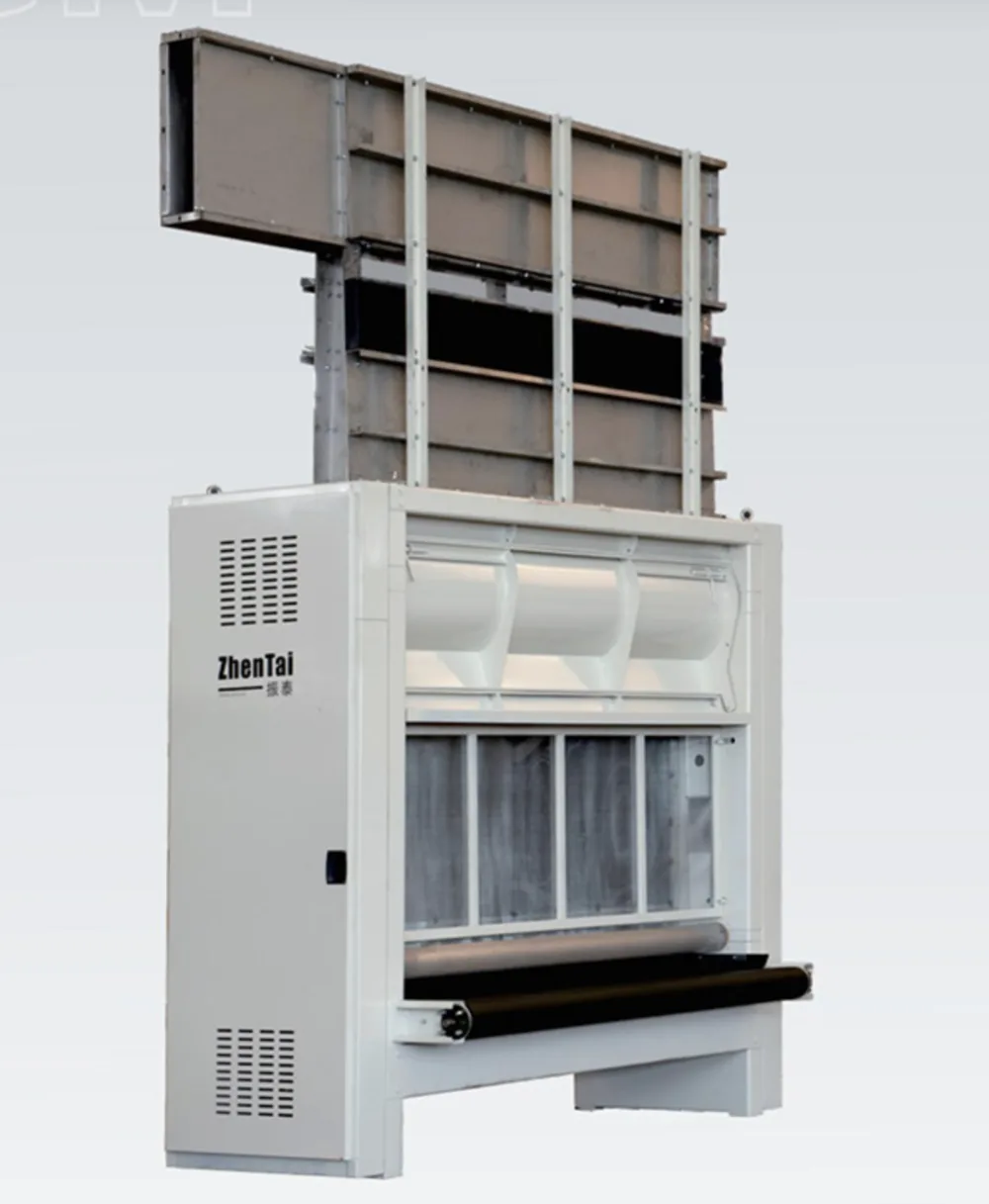
Because the web is the foundation of every fabric property downstream, a fault born at the card clothing always resurfaces in the finished roll. The upstream feeding stage contributes too — see the feeder and carding section for the whole web-forming train.
Conclusion
Web quality depends on specifying the right geometry set — working angle, pitch, tooth depth and total height, rib thickness, PPSI and surface coating — for the roller position and the fibre being run. Pick the right series, grind and replace at the right time, and wind at the right tension: those three decide whether the web is even far more than any adjustment made downstream.
Vina Nonwoven supplies genuine White Shark card clothing in Vietnam — the non-woven series, cotton-spun series and woolen and cashmere series — with advice on the right tooth specification for your card and fibre, made to order. Contact us by hotline or Zalo for advice and a quote.