The short answer: choose the technology by your end product, not by the machine. If you need thick, strong, load-bearing fabric (geotextiles, carpet, filter fabric), choose needle-punch; if you need thin, even, high-volume fabric (bags, agricultural, medical fabric), choose spunbond. Below is how each technology works and a comparison table to help you decide.
Quick answer
- Needle-punch — bonds fibers mechanically, producing thick, strong, chemical-free fabric. Choose it when your product needs thickness and high tensile strength.
- Spunbond — extrudes continuous filaments then bonds them with heat, producing thin, even, very-high-throughput fabric. Choose it when you need large volumes at a low cost per metre of fabric.
Both are “nonwoven fabric”, but they serve different product families. Choosing a machine therefore starts from the product you intend to sell.
What is needle-punch technology?
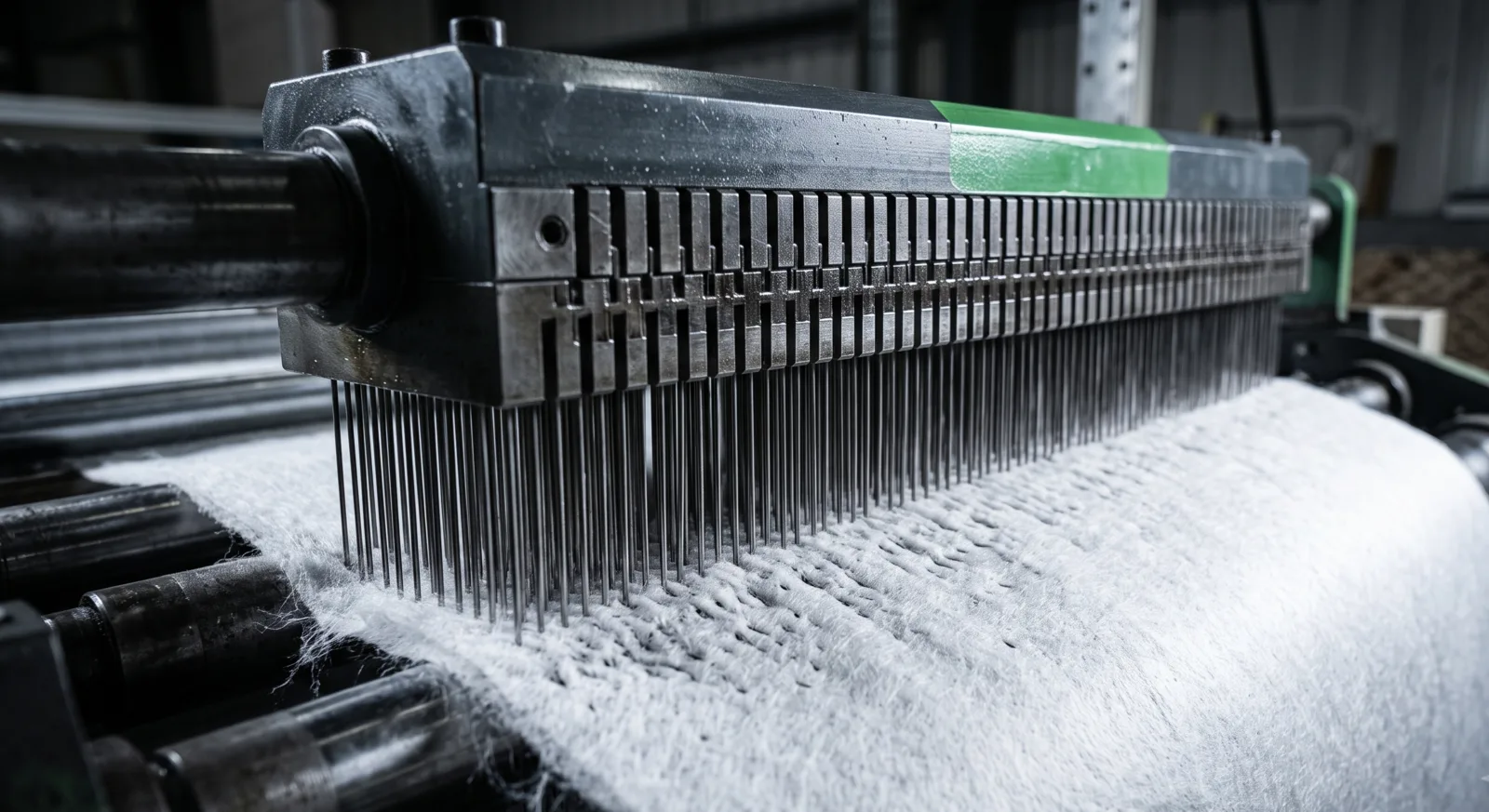
Needle-punch bonds fiber layers mechanically: tens of thousands of barbed needles punch through the fiber web, hooking and entangling the fibers so the layers grip each other — no glue or chemicals needed. The result is thick, strong, load-bearing fabric.
A standard needle-punch line consists of these machines in the order the material flows:
- Fiber opener & mixer (bale opener + mixer) — opens and blends PET/PP fiber.
- Carding machine — cards the fiber into thin, even webs.
- Cross-lapper — folds multiple web layers to reach the target weight.
- Needle loom — barbed needles punch through, bonding the layers mechanically.
- Calendering / finishing stage — heat-pressing or calendering to finish the surface.
- Winder — winds the finished fabric into rolls.
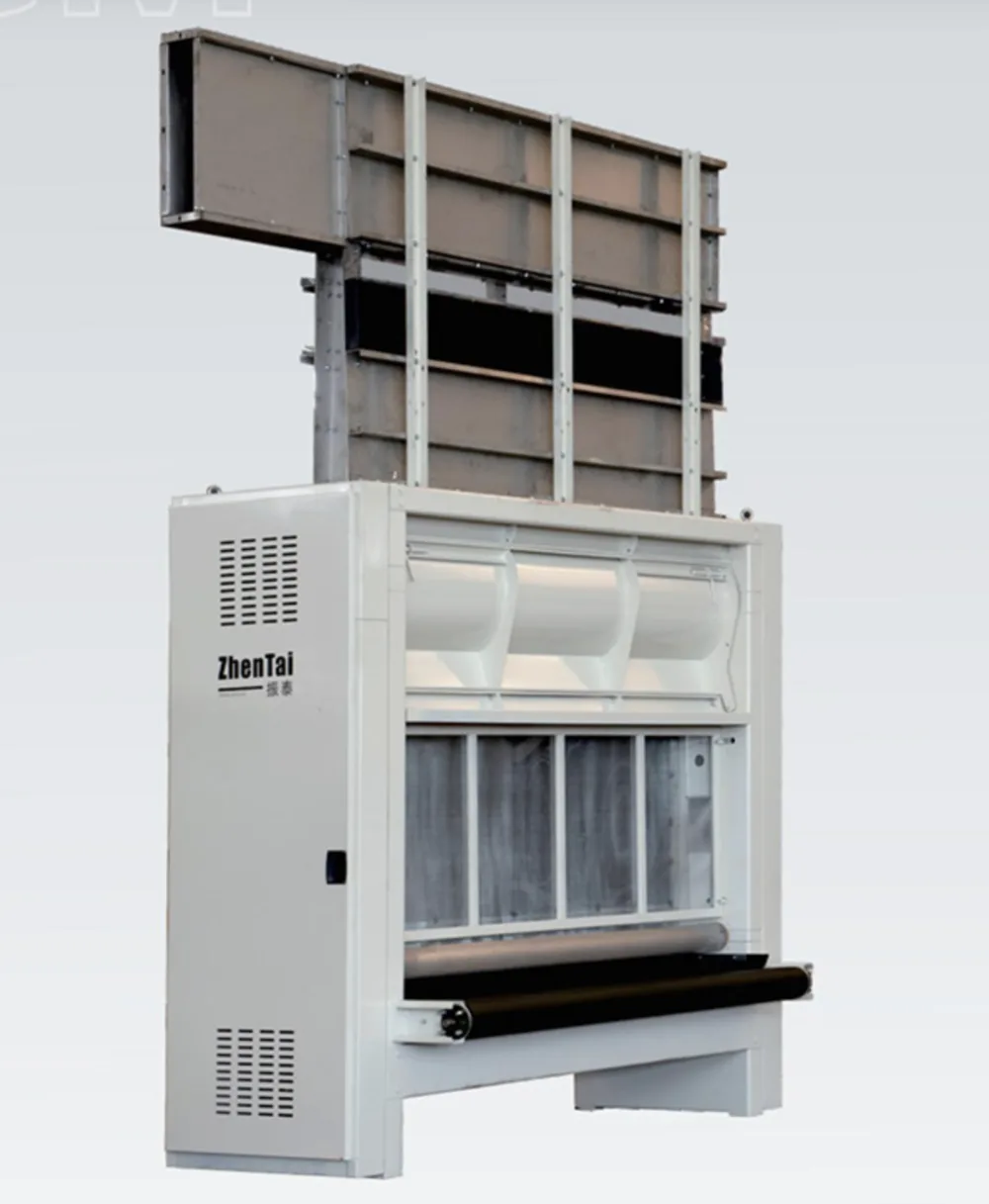
Typical products: geotextiles, carpet, industrial filtration, automotive materials, sound insulation. Vina Nonwoven supplies this entire line through the Nonwoven-line machinery (Zhentai) category.
Want the technical detail of each step? Read The Needle-Punch Nonwoven Production Process: Needle Punching.
What is spunbond technology?
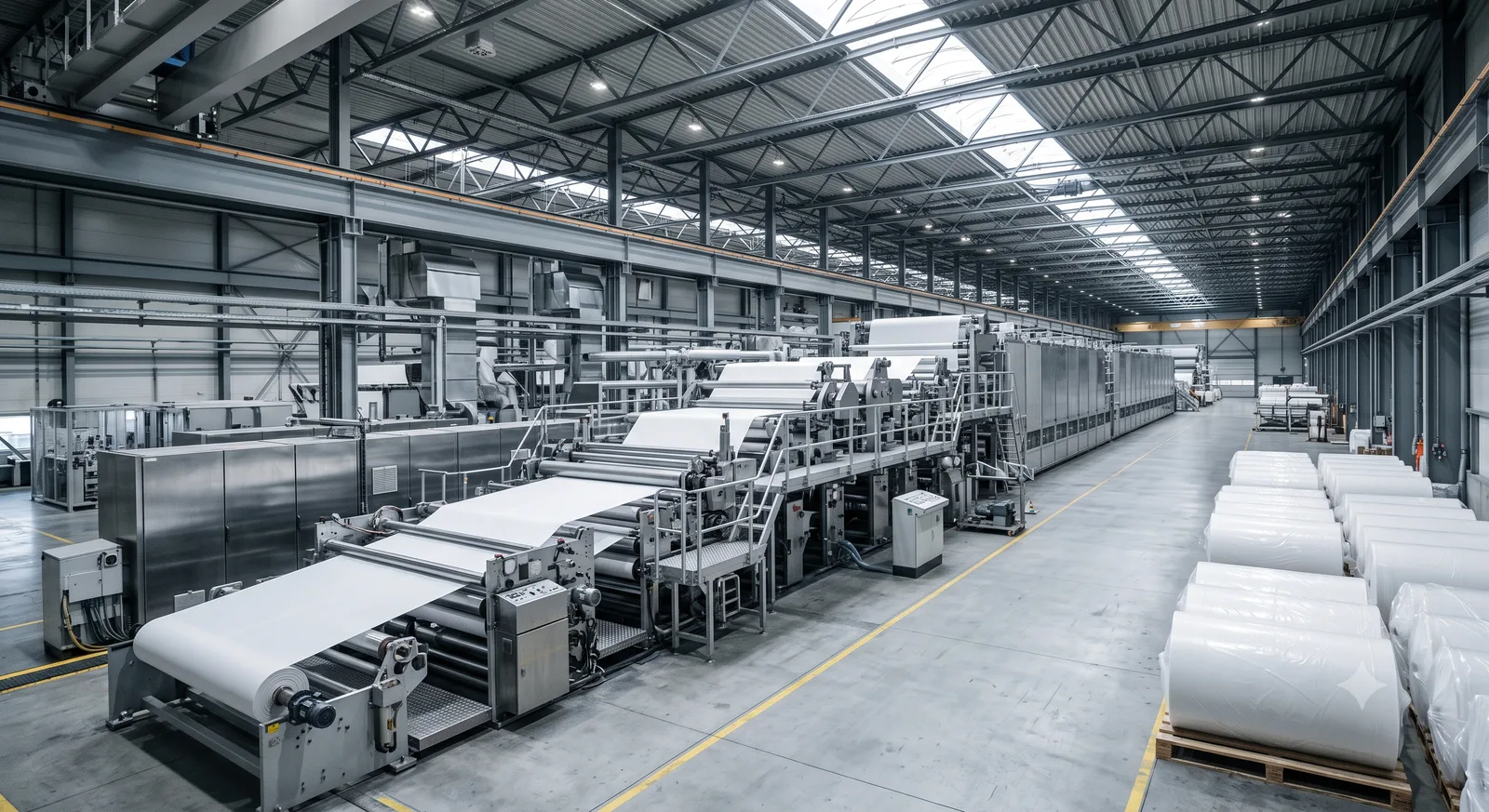
Spunbond makes fabric a completely different way: a polymer (usually PET) is melted then extruded into continuous filaments, laid directly into a web and bonded with heat right on the line — skipping the carding and cross-lapping stages of needle-punch. Because the filaments are formed and bonded in one continuous flow, the fabric is thin, even and very high-throughput.
Typical products: nonwoven bags, geotextiles, waterproofing, agricultural and medical fabric. See the PET Spunbond lines (Huayang) category.
Quick comparison table
| Criterion | Needle-punch | Spunbond |
|---|---|---|
| Bonding principle | Mechanical, via barbed needles | Continuous filament extrusion + thermal bonding |
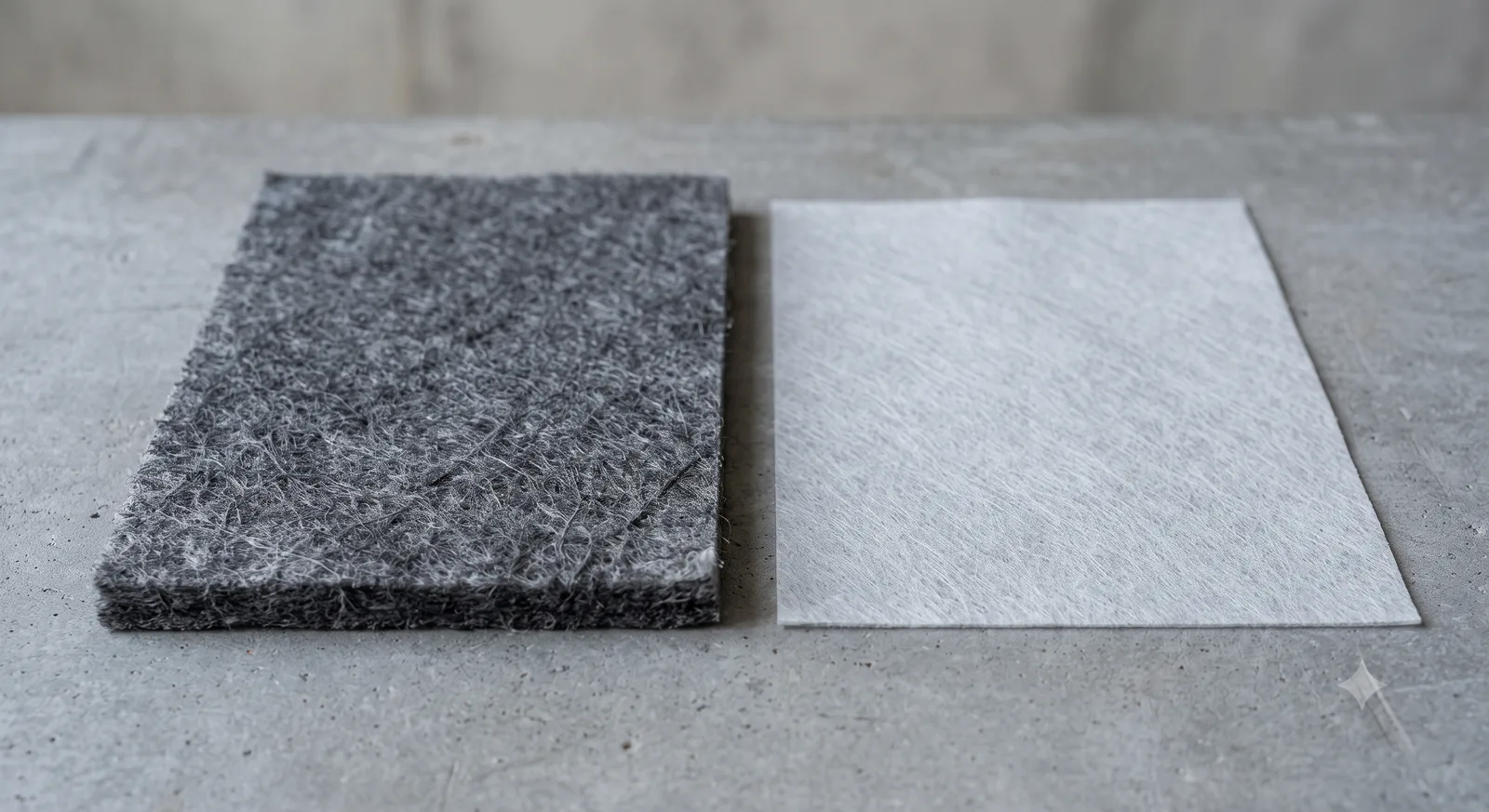
| Thickness & strength | Thick, high mechanical strength | Thin, even, moderate strength |
| Throughput | Medium | Very high |
| Raw material | Staple fiber (PET/PP) | Polymer pellets (PET) |
| Typical applications | Geotextiles, filtration, automotive, carpet | Bags, agriculture, medical, waterproofing |
| Output products | Thick, load-bearing fabric | Thin, high-volume fabric |
Which technology should you choose for your plant?
Work backwards from the product you want to sell to the technology:
- Fabric that must be thick and load-bearing (geotextiles, filter fabric, carpet, automotive materials, sound insulation) → needle-punch.
- Fabric that must be thin, even and high-volume (bags, agricultural fabric, medical fabric, waterproofing) → spunbond.
- Your input is staple fiber → also consider the upstream staple-fibre production lines (Yongxing).
Note: one line cannot run both technologies — they differ from the principle up. If your plant needs both product families, you invest in two separate lines.
Not sure which to choose yet? Read What machines and production line do you need to start a nonwoven plant? for line configuration, The investment cost of a nonwoven line to estimate capital, and Where to buy a nonwoven line in Vietnam? for where to source one.
Vina Nonwoven’s engineers advise free of charge: tell us your intended product and target capacity, and we will pick the right technology, propose a configuration and give you a suitable quote. Call the hotline or message us on Zalo to get started.