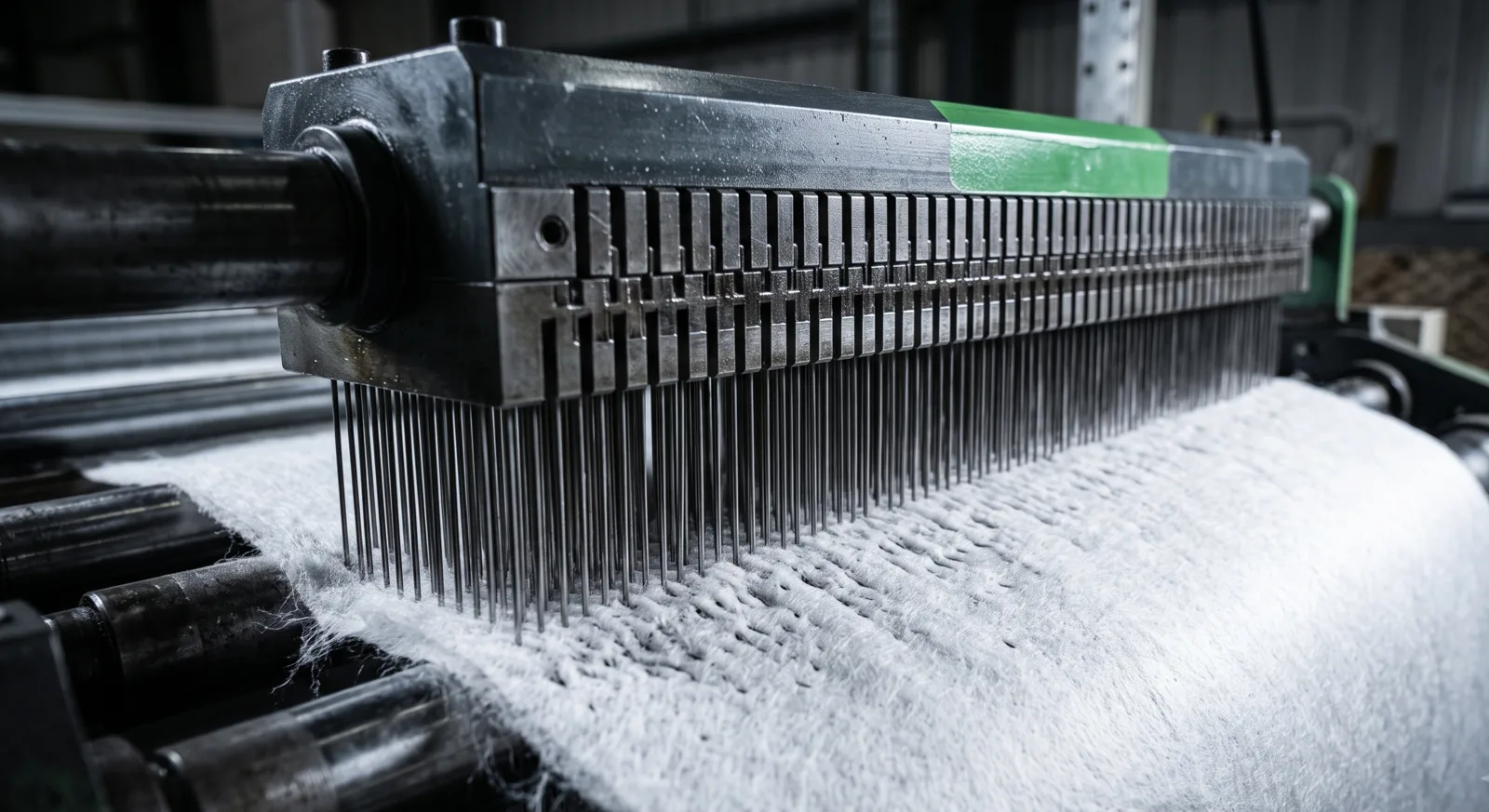
The short answer: the machine that produces needle-punched fabric is the needle loom — the unit that sits after web forming in a nonwoven line and drives thousands of barbed needles through the fibre layers, bonding them mechanically with no glue or binder. A note on terminology first: here “needle punch” means needling a fibre web, not tattoo equipment.
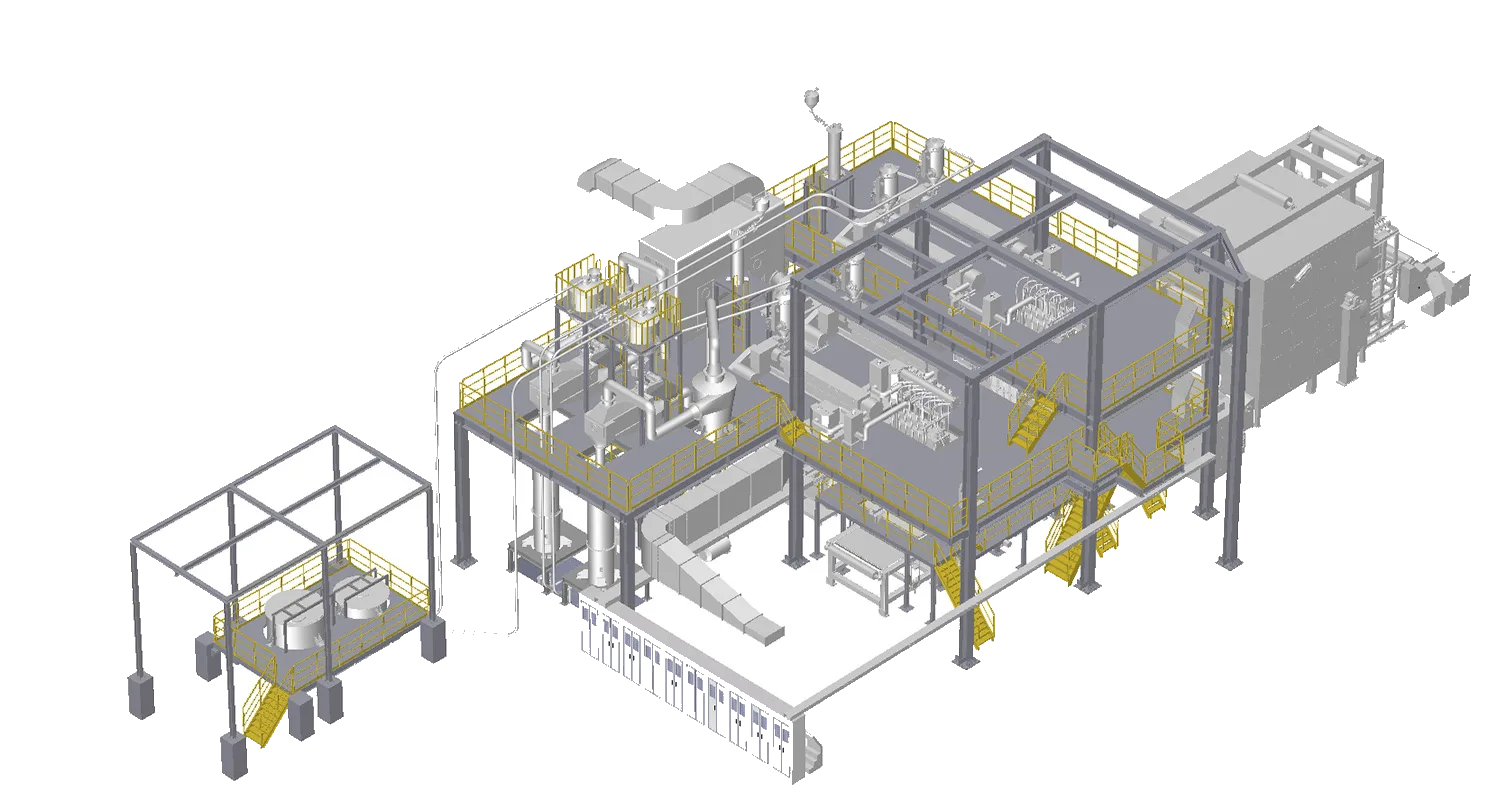
But “needle loom” is not a single machine type. This guide covers the needle loom variants found on a production line, their real specifications, and how to choose by the product you plan to make. For every stage before and after the needling section, see the needle-punch nonwoven production process; for its place in the whole line, see nonwoven production machines.
Where the needle loom sits in the line
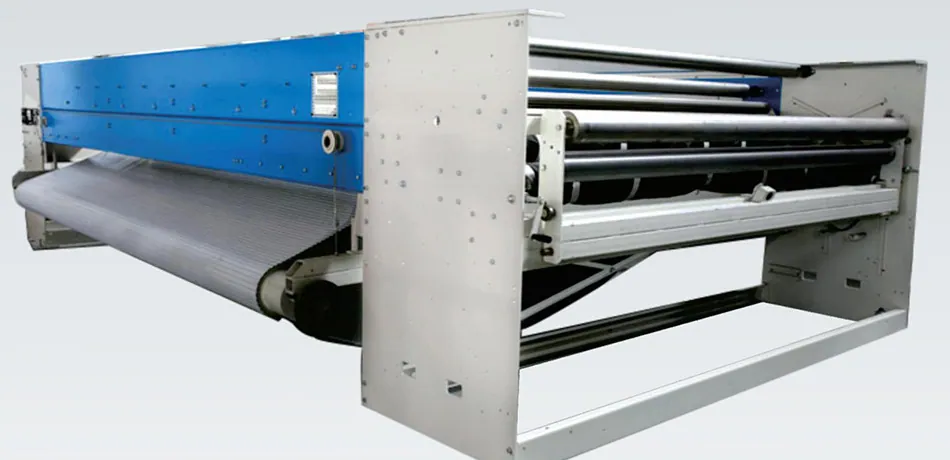
On a needle-punch line, fibre that has been opened, blended and carded is folded into many layers by the cross lapper, then fed into the needling section by a batt feeder or pony-roll feeder. A line typically runs several looms in series: a pre-needling loom sets the loose batt, and finishing looms increase density and refine the surface.
Inside the loom, needles sit in the needle board, which is mounted on the needle beam. Needles and boards are the line’s main wear parts.
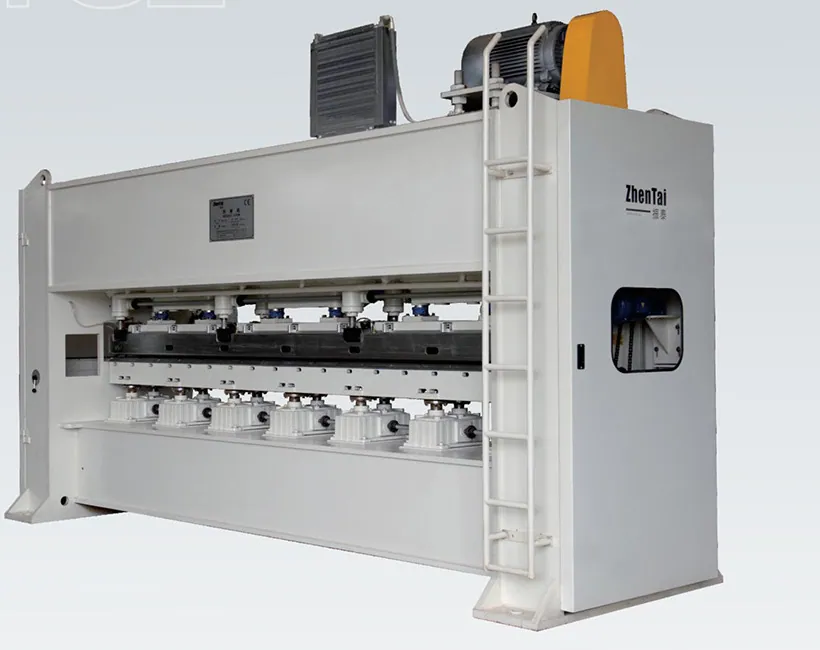
Needle loom types and specifications
By punching structure
- Pre-needling (tacking) loom: the first unit, lightly bonding the loose batt so later looms can work it without tearing the web.
- Upstroke / downstroke looms: needles enter from below or above; the direction decides which fabric face gets finished.
- Counter-punch loom: two opposed boards punch simultaneously from both sides, bonding both faces evenly.
- Double-board loom: two boards on twin main shafts over two needle zones, doubling punches per pass for higher output.
By speed and product
| Loom type | Width | Punching frequency | Needle density | Used for |
|---|---|---|---|---|
| Middle-speed needle loom | 2,000–10,500 mm | up to 700/min | 3,000–8,000 n/m | Common felt, needle-punched fabric, standard geotextile |
| High-speed needle loom | 2,000–9,200 mm | 800–1,200/min | 4,000–8,300 n/m | High-density fabric at high output |
| Counter needle loom | 2,000–9,200 mm | 800–1,200/min | 5,000–8,300 n/m × 2 boards | Geotextile and technical felt, both faces even |
| Double-board needle loom | 2,000–9,200 mm | 800–1,200/min | 4,000–8,300 n/m | High output for geotextile and backing fabric |
| Velour needle loom | 2,200–4,200 mm | 800–1,400/min | 5,000 n/m × 2 boards | Automotive carpet, velvet-surface decorative fabric |
| Striped needle loom | 2,200–5,600 mm | 900/min | 5,000 n/m | Striped carpet |
| Pattern needle loom | 2,400–5,600 mm | 1,000/min | 16,000 n/m | Multi-colour patterned and rib carpet |
How to choose a needle loom by product
Choose in this order: product → width → density → speed.
- Product decides structure: geotextile and technical felt need counter-punch or double-board looms so both faces bond evenly; automotive carpet and decorative fabric need velour or pattern looms; common fabric only needs a middle-speed loom.
- Width follows the width you can sell: the range covers 2,000 to 10,500 mm; geotextile lines commonly run 4–8 m.
- Needle density follows required firmness: 3,000–8,300 n/m from standard to high-density fabric; 16,000 n/m for fine pattern work.
- Frequency follows output: up to 700/min for steady standard-goods production; 800–1,200/min for throughput; velour looms reach 1,400/min.
- Needle stroke runs 30–60 mm for thick fabric; velour looms use a short 20–30 mm stroke to control pile height.
Needles, boards and maintenance
Felting needles and needle boards are recurring operating costs on every needle-punch line: worn needles under-bond the fabric, and enlarged board holes tilt needles and streak the fabric face. Needles are replaced as sets so punch density stays even across the width. Vina Nonwoven stocks needles, needle boards and components locally, along with card clothing for the carding stage upstream, and provides on-site line maintenance and installation across Vietnam — including machines of other brands.
What drives the cost of a needling section
There is no fixed price for “a needle loom”: cost follows working width, structure (single or double board, counter-punch or not), frequency, and above all how many looms run in series on the line. The line-wide factors — width, capacity, automation, new versus used — are analysed in investment cost of a nonwoven production line.
Get advice and a quote
Vina Nonwoven is the authorized Zhentai representative in Vietnam, supplying every needle loom type in the nonwoven production lines category, with configuration advice, installation, training and maintenance in country. Tell us your product and fabric width for a proposal matching the right loom.
- Request a quote
- Hotline: 0786 877 888
- Zalo: zalo.me/0786877888