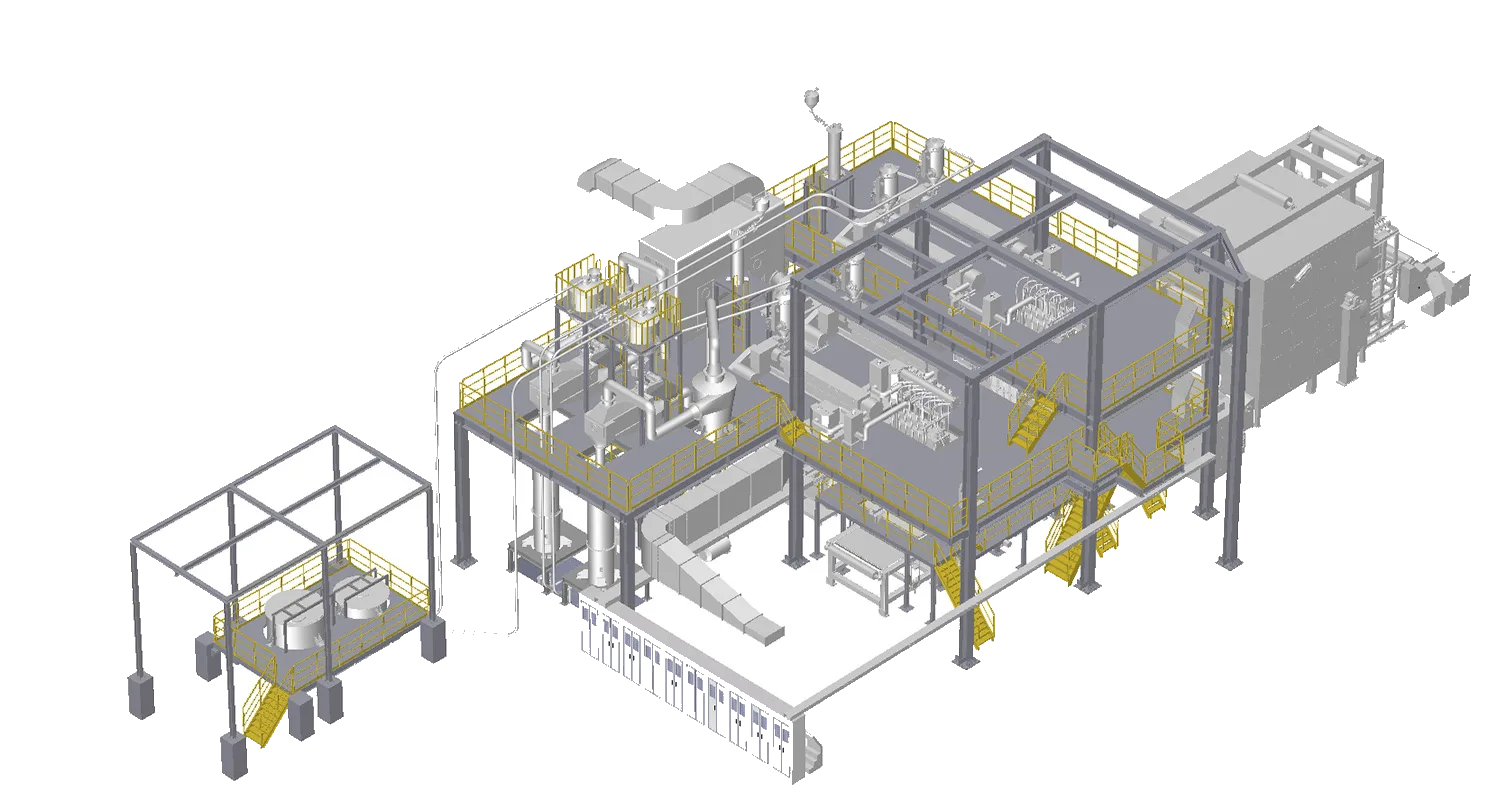
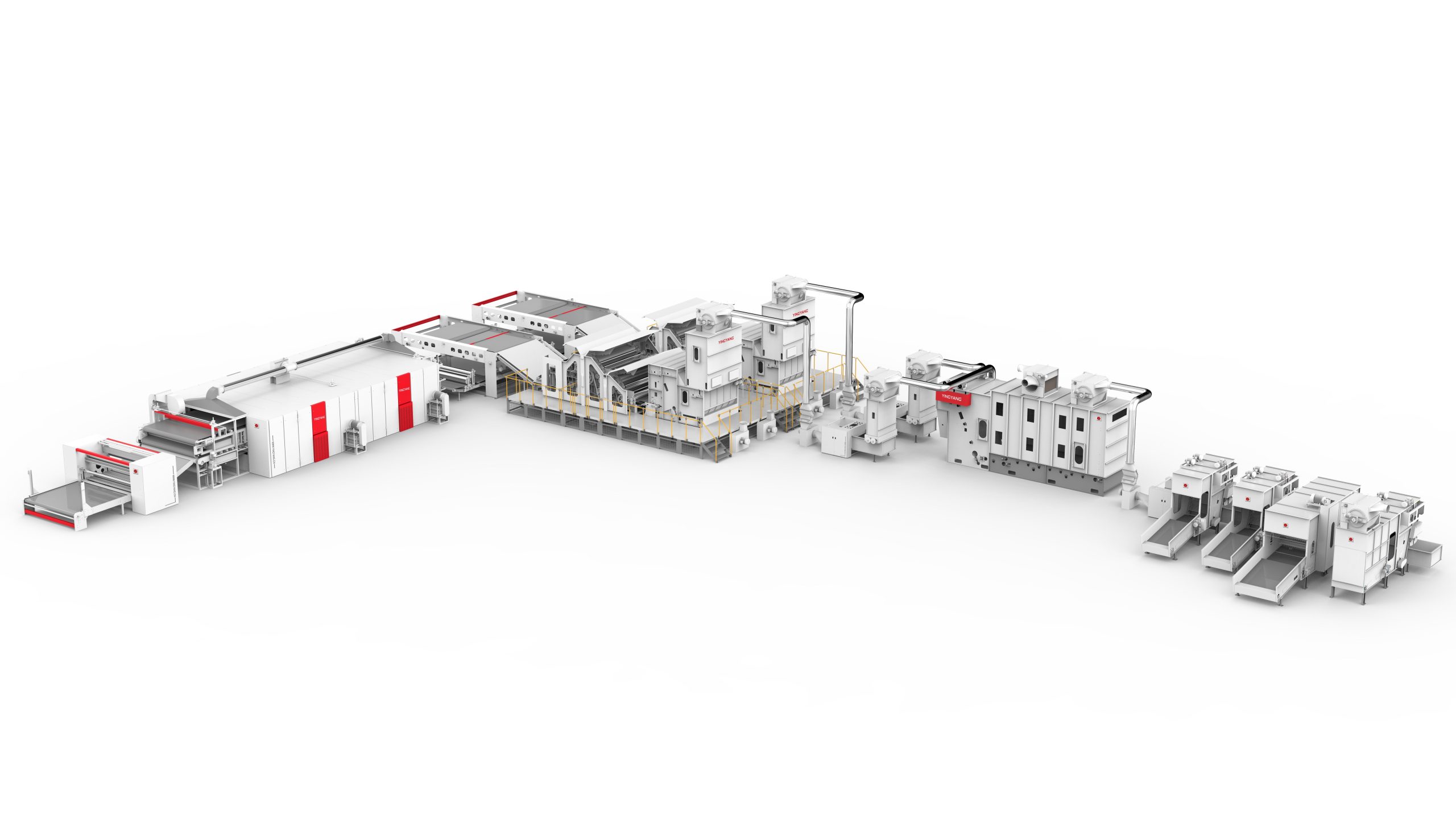
The short answer: a “nonwoven production machine” is not one machine — it is a line of connected units that turns loose fibre (PET, PP, viscose, recycled fibre) or resin granules into finished fabric without spinning or weaving. The end product is decided by how the whole line is configured: the same opening–carding–web-forming section can produce a heavy geotextile or a thin filter felt, depending on the bonding stage behind it.
This guide walks through each machine family in the line, how to choose a configuration around the fabric you plan to sell, and which brands are represented in Vietnam. If you are just starting out, our article on the machines needed to start a nonwoven plant describes a complete line in process order; this one takes the machine-type and selection angle instead.
The machine families in a nonwoven line
A complete line consists of the following families, in the order material flows:
- Opening & blending: breaks open the fibre bale and blends fibre types to a set ratio; this stage decides how even the fabric will be, and a dedicated waste opener handles recycled material. See fibre opening and blending machinery.
- Feeding: supplies fibre to the card continuously and evenly — pneumatic feeders, weighing belts or batt feeders depending on web weight; a double-clip batt feeder, for example, accepts webs up to 2,500 g/m².
- Carding: combs the fibre into a thin, even web. Available widths run 1,850–3,750 mm at output speeds of 45–90 m/min depending on the model; web quality depends directly on the card clothing.
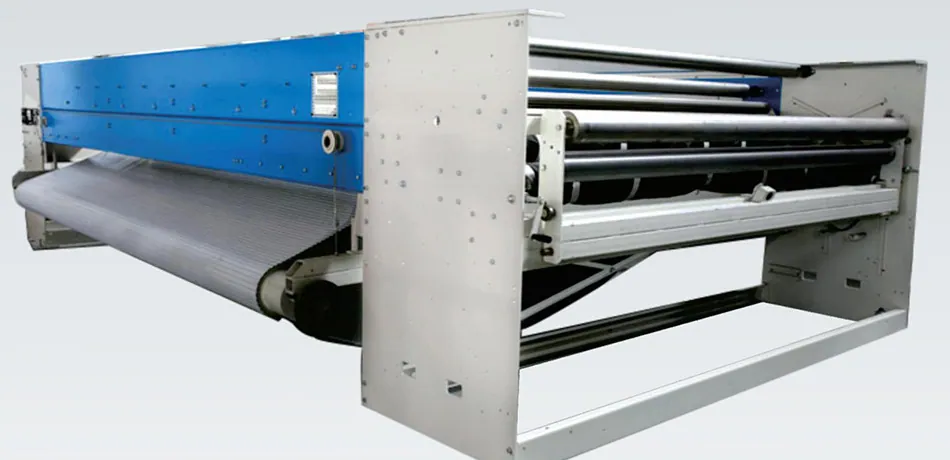
- Web forming: the cross lapper folds the web to reach the target width and weight; a vertical lapper builds thick, resilient batts for mattresses and padding.
- Bonding — the part that defines the fabric:
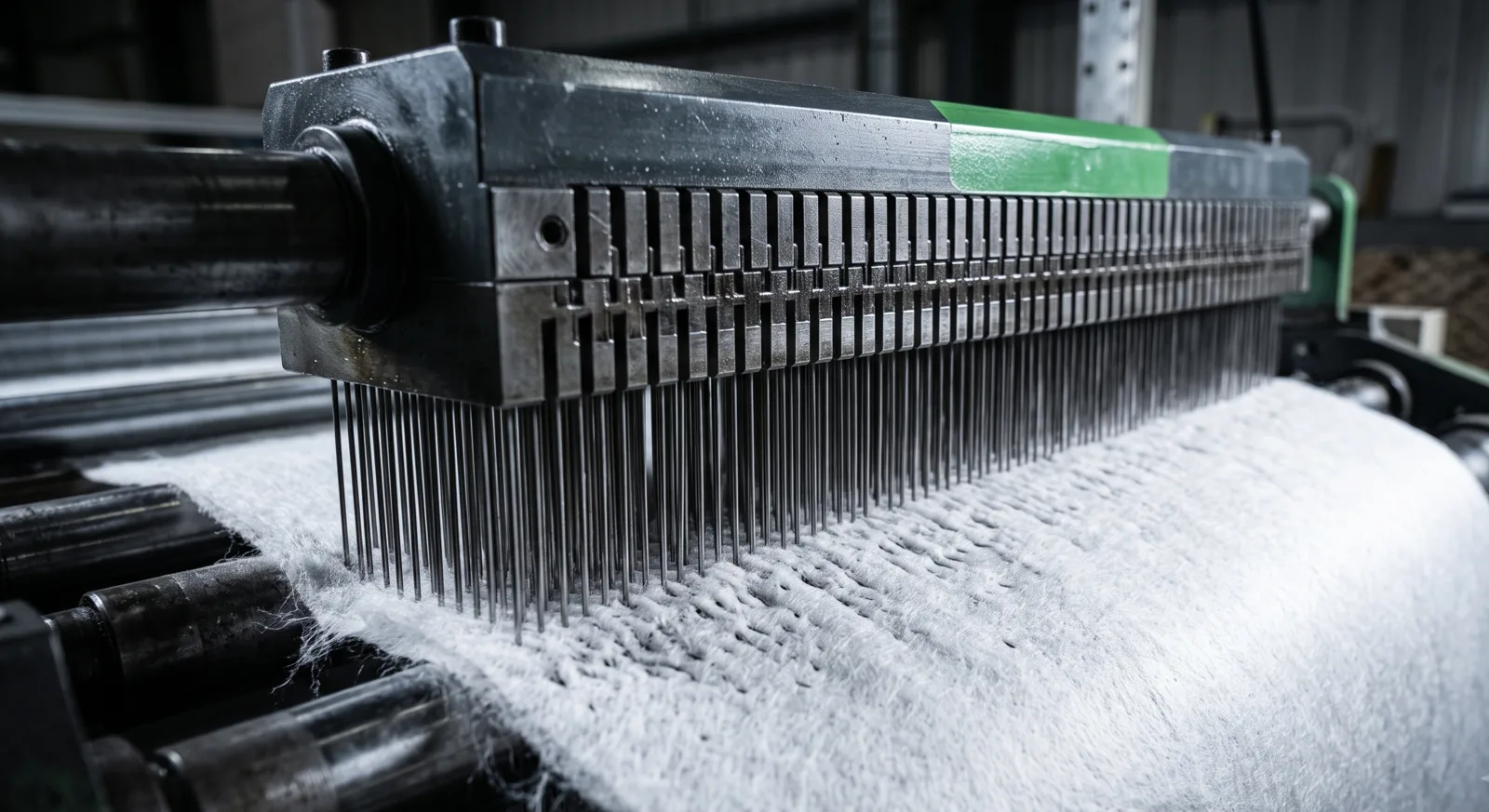
- Needle looms for thick, mechanically strong fabric: geotextile, filter media, carpet, synthetic leather. See our guide to needle-punch fabric machines.
- Spunlace for thin, soft, clean fabric such as wipes and medical fabric.
- Thermal bonding / drying for binder-free and rigid wadding.
- Spunbond: continuous filaments spun from resin and calendered, for thin, even, high-output fabric — see PET Spunbond lines (Huayang).
- Finishing & winding: calendering, surface treatment, edge trimming and the winder.
All of these sit under the nonwoven production lines category and can be bought as a complete line or as individual machines. There is also a purpose-designed geotextile production line at 4–8 m working width.
Choosing machines around your end product
Machine selection always starts with “which fabric are you going to sell?”, not with a machine catalogue:
| Target product | Fabric characteristics | Key technology / machine section |
|---|---|---|
| Geotextile | Thick, high tensile, permeable | Needle punch, wide width |
| Industrial filter media, felt | Even, high density | Needle punch + calendering |
| Artificial leather, shoe substrate | High density, smooth face | High-density needling |
| Automotive carpet, decorative fabric | Velour or ribbed surface | Velour / pattern needle looms |
| Wipes, medical fabric | Thin, soft, clean | Spunlace |
| Binder-free wadding, padding | Lofty, shape-retaining | Thermal bonding |
| Bags, covers, crop fabric | Thin, even, high volume | PET Spunbond |
Prepare four figures before asking for a quote: fibre type (PET, PP, recycled, blends), target weight (GSM) and fabric width, and target output per day or month. Width is the least reversible decision — the card, lapper, needling section and even the building are all built around it, and a wide line only pays off when orders are large enough to run continuously.
If you are weighing the two main technologies, see needle punch or spunbond: which technology to choose.
Brands represented in Vietnam
Vina Nonwoven represents four OEM brands, each a specialist in its own stage:
- Zhentai (Changshu, since 2008): complete nonwoven lines — opening, carding, web forming, needle punch, spunlace — for geotextile, filtration and microfiber leather.
- Huayang (Dalian): PET spunbond lines for high-strength substrate and geotextile, with more than 200 lines installed.
- Yongxing (Zhangjiagang, since 1997): staple-fibre production lines rated 2,000–30,000 TPA — the upstream stage feeding both technologies.
- White Shark (since 1962): card clothing — the part that governs web quality on the card.
Installation, maintenance and parts in Vietnam
A nonwoven line is a long-term investment, so after-sales capability matters as much as the machine itself:
- On-site installation & commissioning: site survey, planning, alignment and acceptance testing of the whole line — see the installation & relocation service and the technical services category.
- Stocked spare parts: felting needles, needle boards, card wire and conveyor belts for every machine brand, avoiding long import waits — see components & spare parts.
- Card-wire mounting: when worn card clothing makes the web uneven, the card wire mounting service restores carding performance without replacing the machine.
What drives the investment
The site does not list prices because every configuration differs. Total investment is driven mainly by fabric width, weight range, capacity, automation level, bonding technology and whether the machinery is new or pre-owned — an inspected used line lowers the initial capital for a new plant. Each factor is analysed in investment cost of a nonwoven production line.
Get a configuration and a quote
Send us your fibre type, end product, fabric width, weight and target output — Vina Nonwoven’s engineers will propose a configuration and quote it, at no consulting cost.
- Request a quote
- Hotline: 0786 877 888
- Zalo: zalo.me/0786877888