The short answer: airlay and needle punch are not two competing technologies. Airlay is a way of forming the fibre web. Needle punching is a way of bonding that web into fabric. So the real comparison is between airlay and carding with cross lapping, the two main ways to build a web from staple fibre. In many plants, whichever forming method is used, needle looms come next.
This guide explains what each process does, which fibres and products suit each, and what that means if you are planning a nonwoven line.
Where each step sits in the line
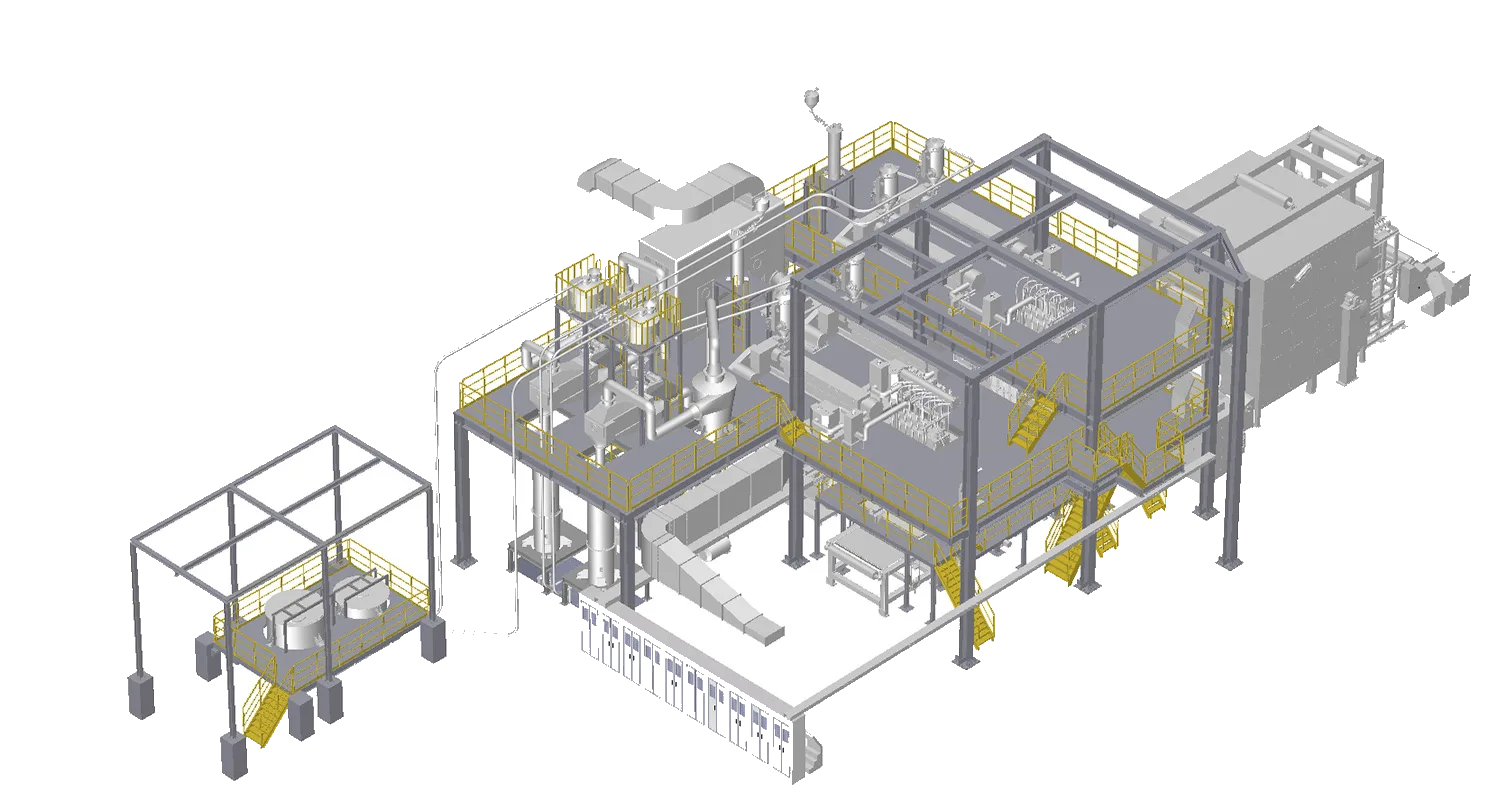
A dry-laid nonwoven line has three main stages:
- Fibre preparation: opening and blending the bales. See fibre opening and blending machinery.
- Web forming: turning loose fibre into a continuous web or mat. This is where airlay or carding plus cross lapping happens.
- Bonding: locking the fibres together. This is where needle punching happens, or alternatively thermal bonding or chemical bonding.
When people search “airlay vs needle punch”, they usually mean one of two lines: an airlay former followed by bonding, or a card and cross lapper followed by needle looms.
What is airlay?
In an airlay machine, opened fibre is fed to a fast-rotating cylinder that separates it into individual fibres. An air stream then carries the fibres onto a perforated drum or belt with suction underneath, where they are collected as a mat.
Because the fibres land from the air rather than being combed in one direction, the result has some distinctive features:
- Random, three-dimensional fibre orientation, so strength is similar in the machine and cross directions.
- High loft and thickness, with good resilience. This is why airlay mats are used for insulation and padding.
- Tolerance of difficult fibres: short, coarse, stiff or mixed fibres, including recycled textile waste, natural fibres such as coir and jute, and blends containing particles. Machine makers advertise airlay formers for exactly these materials.
- Heavy mats in one pass: airlay formers usually make heavy mats, in the hundreds to thousands of g/m², rather than light webs.
The trade-offs: thin, light, very even webs are harder to make by airlay, and surface uniformity is usually lower than a carded and cross-lapped web of the same weight.
Airlay or airlaid? Airlay usually means dry forming of staple fibres into thick mats. Airlaid usually means a pulp-based process that forms very short cellulose fibres into absorbent sheets for wipes and hygiene products. They are different machines for different markets.
What is carding and cross lapping?
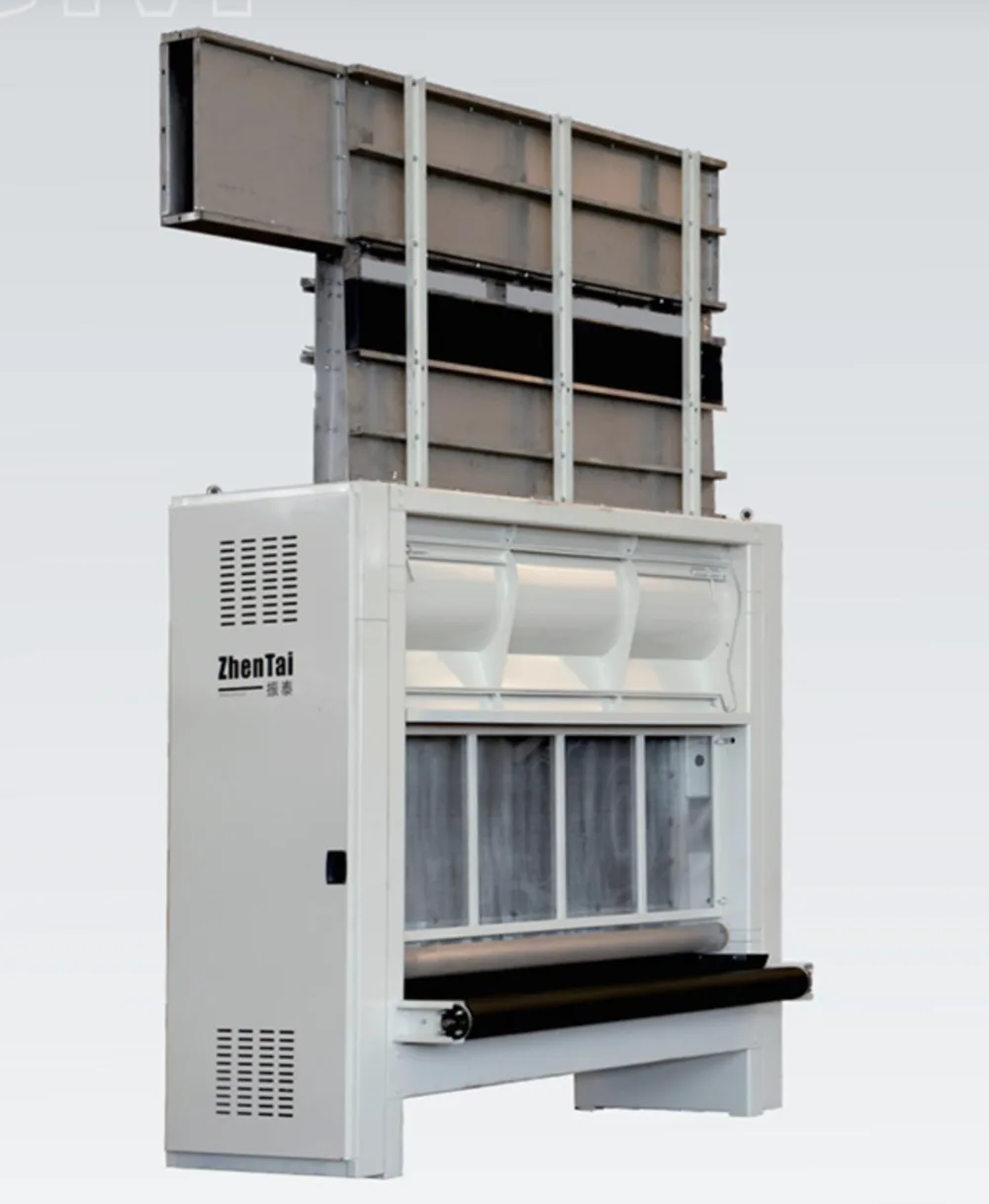
On a carding line, opened fibre passes through a card whose wire-covered rolls comb the fibres into a thin, even web with the fibres mostly aligned in the machine direction. A cross lapper then folds that web back and forth across a wider apron, building up many layers.
This route gives you:
- Even weight across a wide width: the number of layers and the line speed set the final weight, and the cross lapper sets the width.
- A wide weight range from the same line, from light to heavy fabric.
- Good strength balance once the layered web is needled, because the lapping angle puts fibre in the cross direction.
It needs fibres that card well: regular synthetic staple such as PET and PP, with enough length and crimp to form a coherent web. For more on the stage, see the cross lapper in needle-punch lines.
What is needle punching?
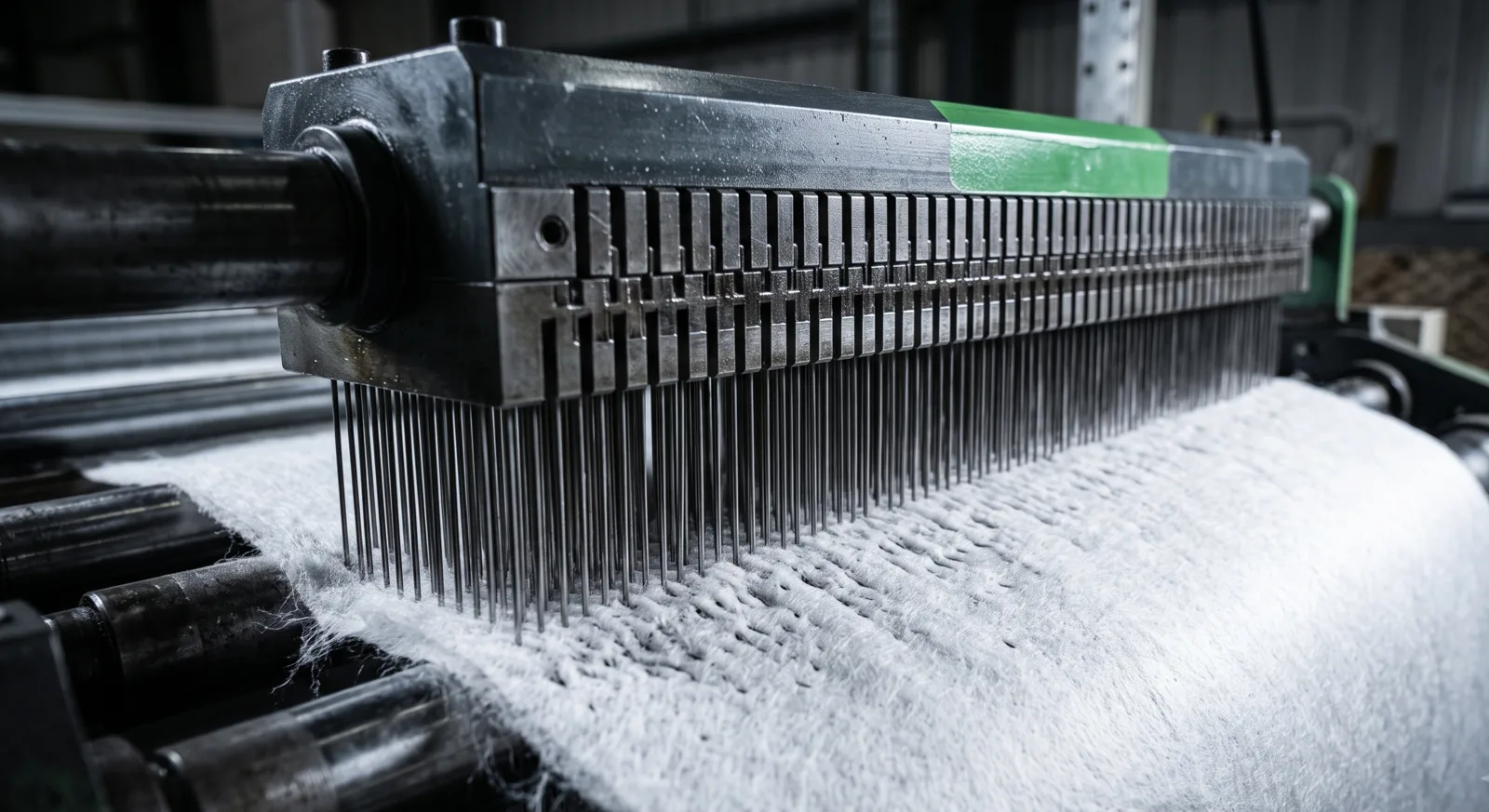
Needle punching bonds a web mechanically. A needle loom drives thousands of barbed needles up and down through the web; the barbs catch fibres and pull them through the thickness, entangling the layers into a single fabric. No glue or binder is needed.
Needle punching can follow either forming method. It is the standard bonding step after carding and cross lapping, and it is also widely used on airlay mats when the product needs strength without a chemical binder. The full process is covered in the needle-punch nonwoven production process.
Comparison table
| Criterion | Airlay forming | Carding + cross lapping |
|---|---|---|
| Stage in the line | Web forming | Web forming |
| How fibres are laid | Blown by air onto a suction drum or belt | Combed into a web, then folded in layers |
| Fibre orientation | Random, three-dimensional | Mostly aligned, crossed by lapping |
| Fibres it handles well | Short, coarse, stiff, recycled, natural, mixed | Regular synthetic staple (PET, PP) with good crimp |
| Typical weight | Heavy mats | Wide range, light to heavy |
| Uniformity | Lower | High |
| Typical next step | Needle punching, thermal or chemical bonding | Needle punching, thermal bonding |
| Typical products | Acoustic and thermal insulation, mattress and furniture pads, automotive mats, coir and natural-fibre mats | Geotextile, filter media, synthetic leather substrate, automotive carpet, felts |
Which should you choose?
Start from the fibre and the product, not the machine name:
- Choose airlay if your raw material is recycled textile waste, natural fibre, or a mix that cards badly, and your product is a thick, lofty mat where insulation, cushioning or volume matter more than an even surface.
- Choose carding and cross lapping if you run regular synthetic staple and need consistent weight and strength across a wide roll, as geotextile, filtration and leather-substrate buyers expect.
- Add needle looms in either case when the product must hold together mechanically without binder.
If what you need is loft from regular fibre, there is a third option: a carding line with a vertical lapper, which stands the web up in vertical folds to make thick, resilient batts for sofas, mattresses and coir mattresses.
What this means for an investor
- Raw material cost drives the decision. Airlay’s case is strongest when cheap recycled or natural fibre is available locally. If you will buy virgin PET or PP staple anyway, a carding line is usually the more flexible choice.
- Product mix matters. A carding, cross lapping and needling line can serve geotextile, felts and filtration from one setup. An airlay line is more specialised toward heavy, lofty mats.
- Recycled fibre still needs preparation. Whichever former you choose, waste material must be opened first. A leftover material opening machine breaks trim and waste back into fibre that can be blended into the feed.
- No single price. Investment depends on width, weight range, capacity and automation. For a breakdown of what drives cost, see investment cost of a nonwoven production line.
Where Vina Nonwoven fits
To be clear: Vina Nonwoven does not supply airlay formers. We are the Vietnam distributor of Zhentai needle-punch nonwoven production lines, covering opening and blending, carding, cross lapping, vertical laying and needle looms, with spare parts, installation and maintenance in Vietnam.
Tell us your fibre, product, weight range and target capacity, and our engineers will tell you honestly whether a carding and needling line fits, or whether airlay is the better route. Contact Vina Nonwoven, or call the hotline or message us on Zalo.