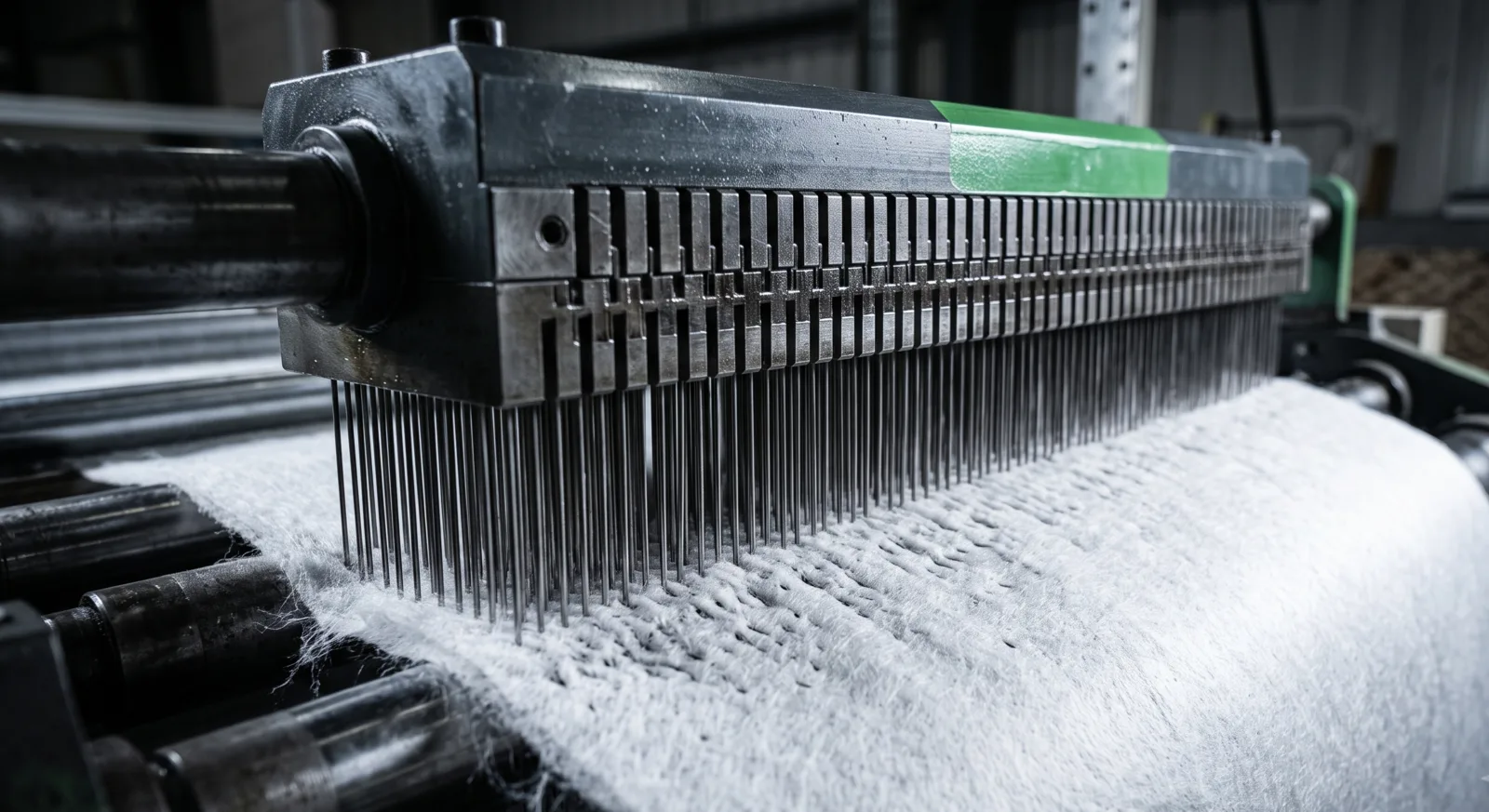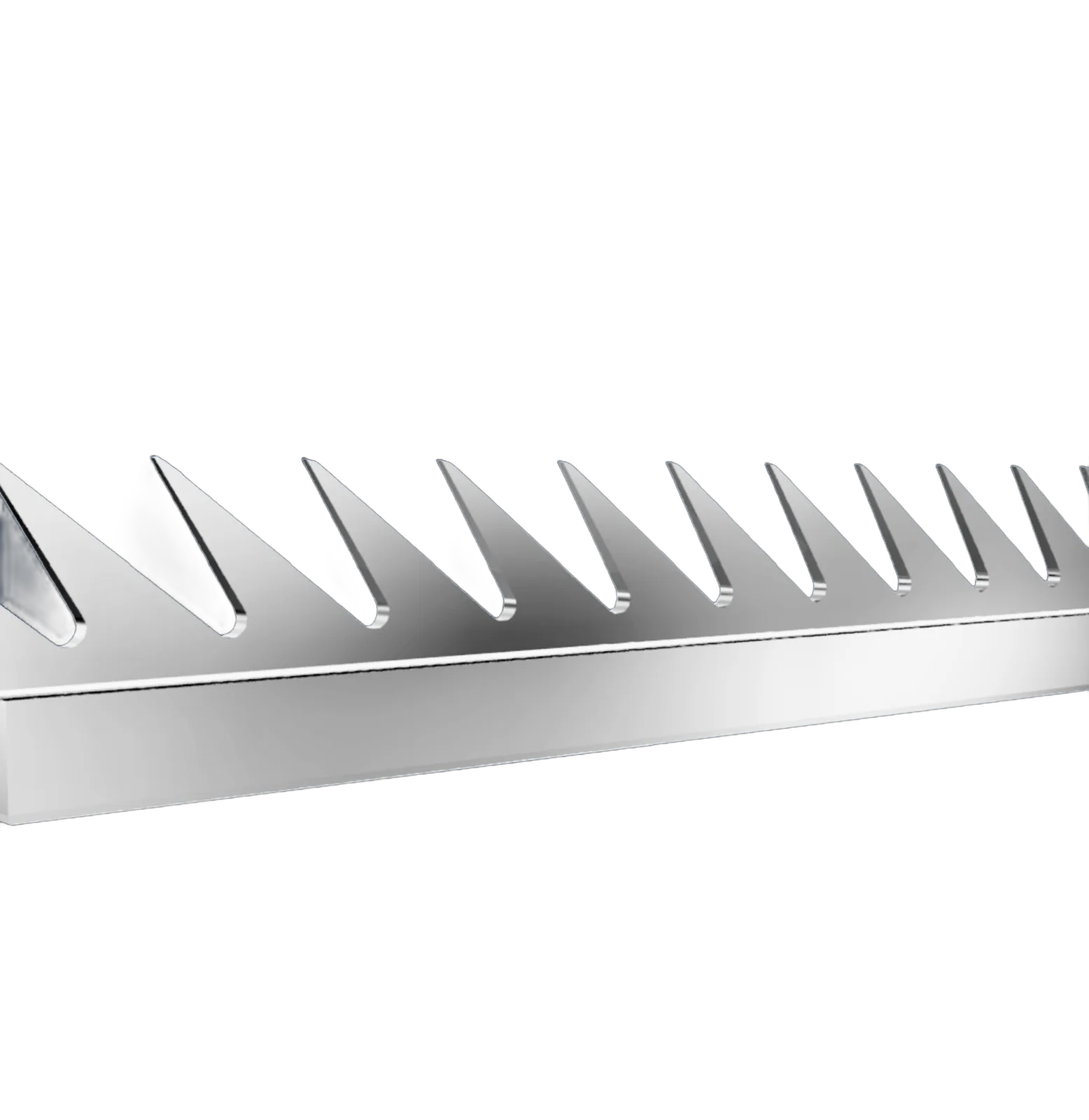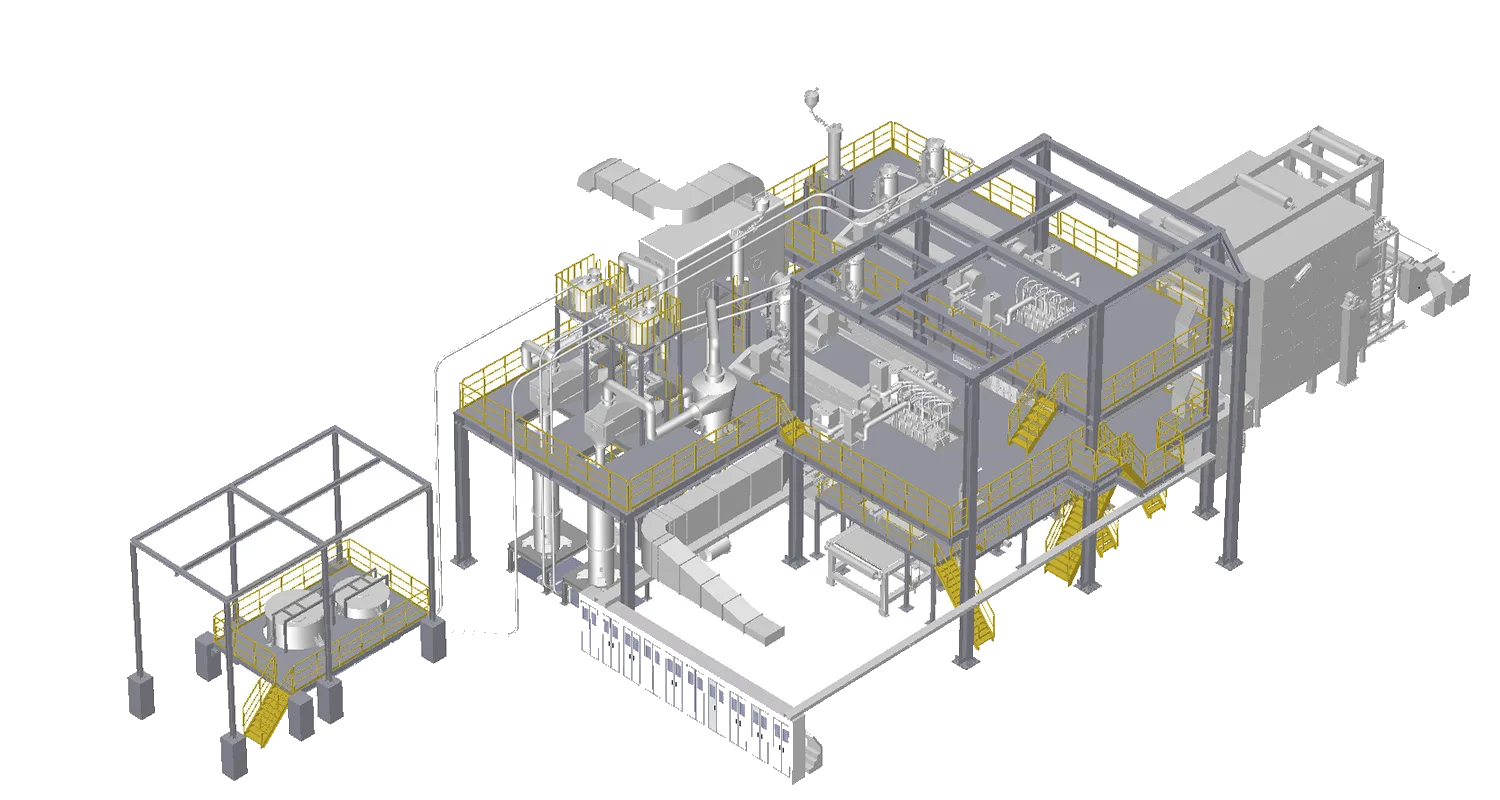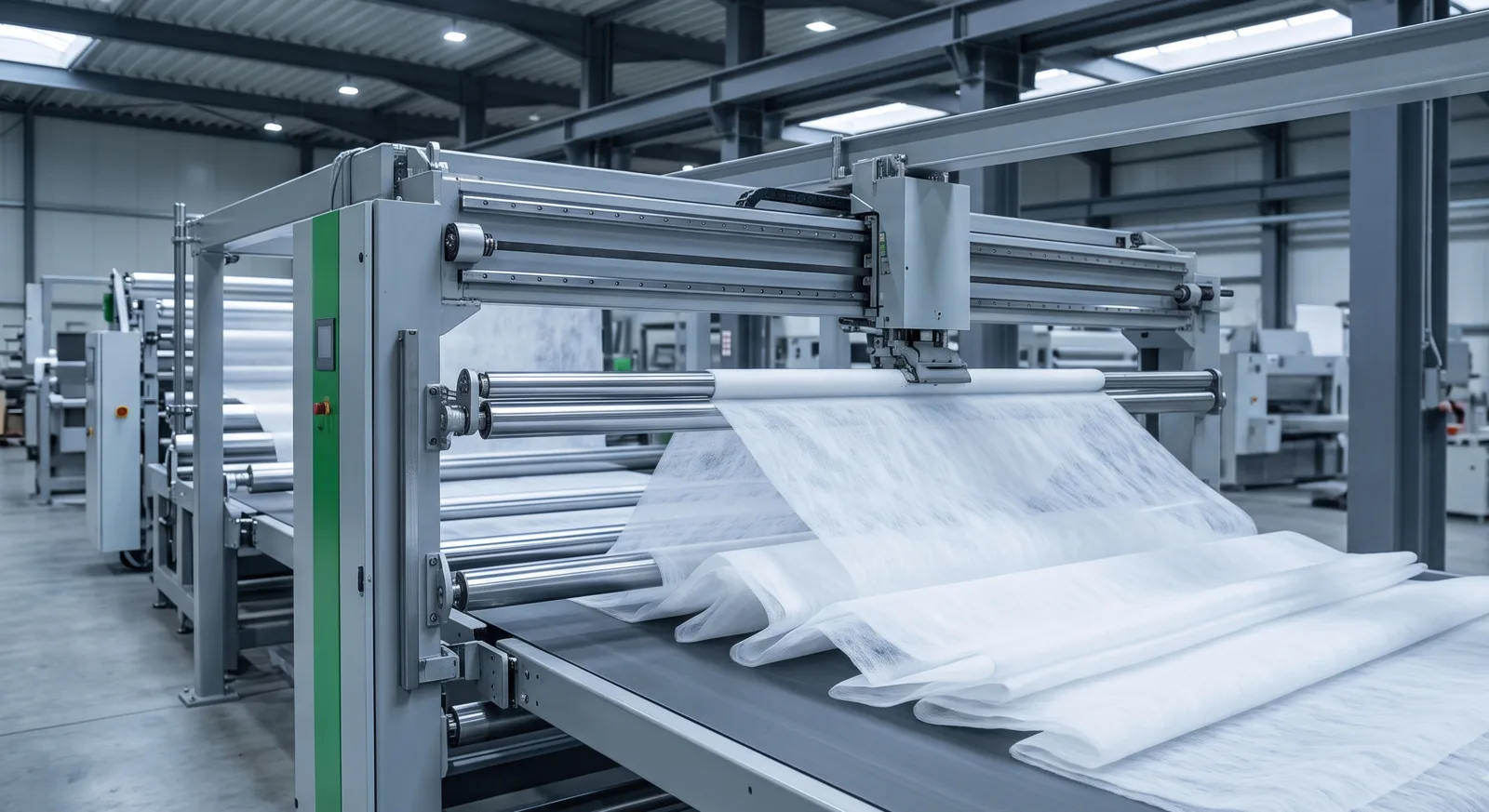
A Cross Lapper is the equipment in a needle-punch nonwoven production line responsible for layering the fiber web from the carding machine onto a conveyor belt, building up a multi-layer web that increases the fabric’s thickness and strength. Because it largely determines the uniformity and strength of the finished fabric, operating and optimizing it correctly directly improves product quality.
Role of the Cross Lapper in Nonwoven Production
- Web layering: turns a thin web into a thick one, making GSM adjustable.
- Cross-direction fiber orientation: improves strength in both the MD (machine direction) and the CD (cross direction).
- Quality stability: ensures the fiber web is distributed evenly across the entire fabric width.
- Groundwork for the needle loom: delivers a uniform web that enables effective needle-punching.
How It Works
Fiber web from the carding machine → infeed conveyor → a reciprocating conveyor system → the web is layered in a zigzag (Z) pattern. The layering speed and conveyor speed determine the thickness, density, and uniformity of the web.
Common Faults When Operating a Cross Lapper
- Uneven fiber layers, inconsistent GSM across the fabric.
- Cause: the two conveyors running out of sync, or faulty sensors.
- Fix: calibrate the conveyor speeds and check the electrical–mechanical system.
- Fabric width narrower than the design width.
- Cause: an excessive layering angle, or an improperly set tension system.
- Fix: adjust the layering angle and the web tension.
- Increased friction, fibers tearing.
- Cause: worn conveyor belts, poor cleaning.
- Fix: replace the conveyor belts and clean them on a regular schedule.
- Large thickness difference between the edges and the center.
- This is a very common fault on most cross lappers in use today.
- A small variance is acceptable, but too large a variance seriously affects fabric quality.
- Currently, only a handful of European machine makers have developed new technology to improve this.
How to Optimize Cross Lapper Performance
- Synchronize the speed of the carding machine, the cross lapper, and the needle loom.
- Use an online GSM sensor to control fiber weight.
- Perform regular maintenance on the conveyor belts and rollers.
- Adjust the layering angle to match the required strength and GSM.
Conclusion
The Cross Lapper is a critical piece of equipment that determines the uniformity and strength of needle-punch nonwoven fabric. Operating and optimizing it correctly improves product quality, reduces waste, and extends the service life of the production line.
Vina Nonwoven is the distributor of complete nonwoven fabric production lines in Vietnam — including the carding machine, cross lapper and needle loom — with installation, maintenance and warranty handled locally. Contact us by hotline or Zalo for configuration advice and a quote.