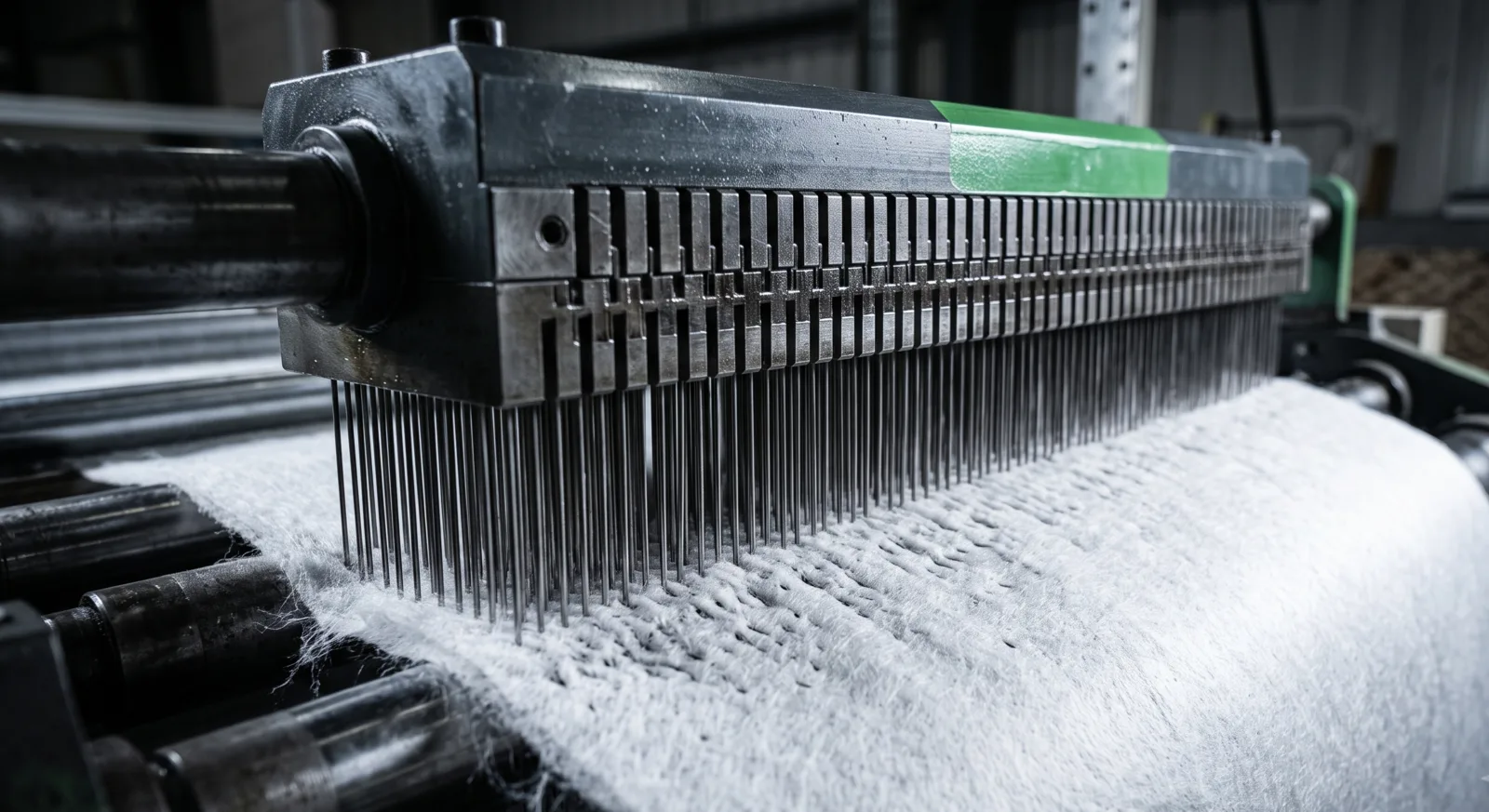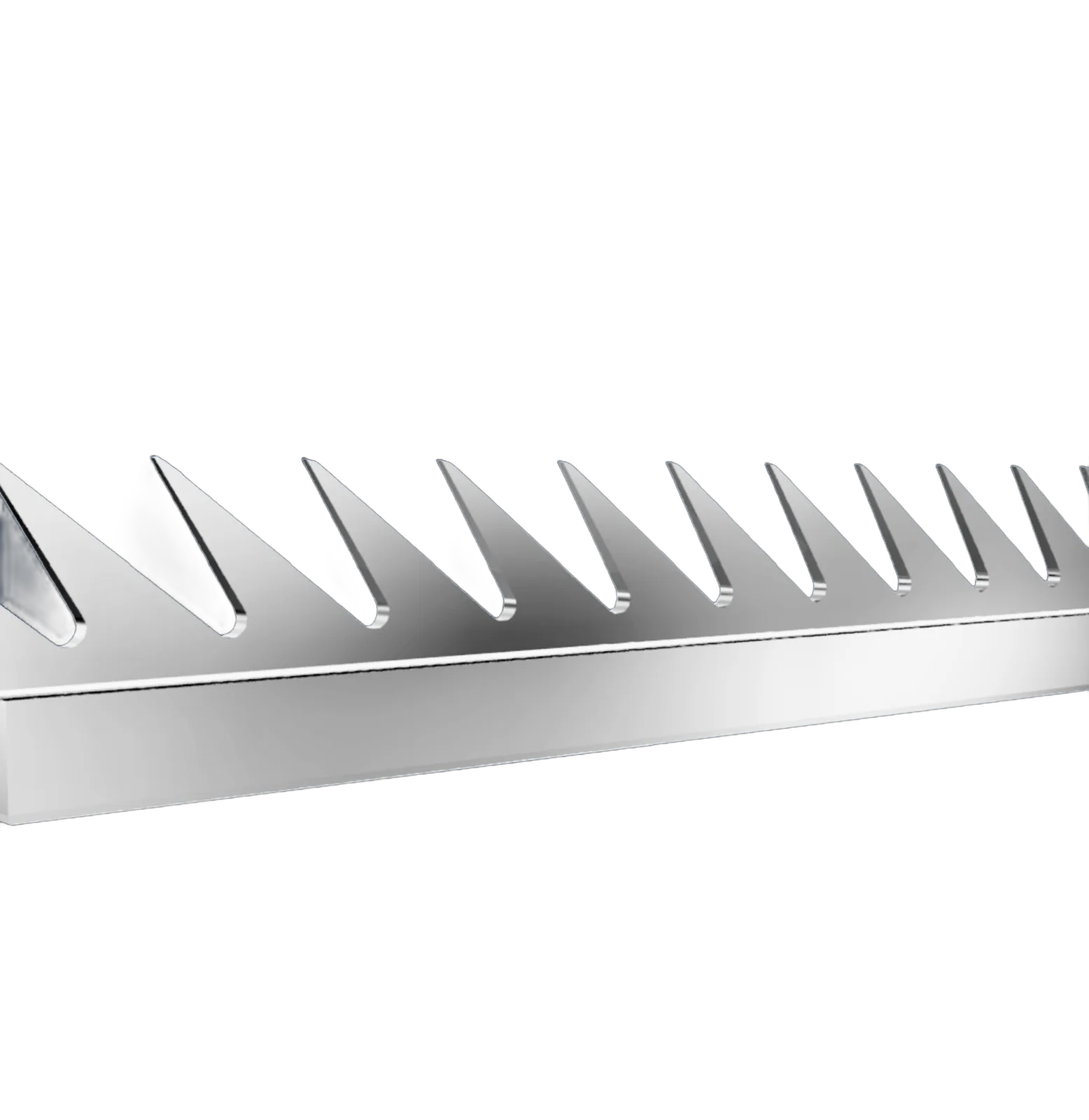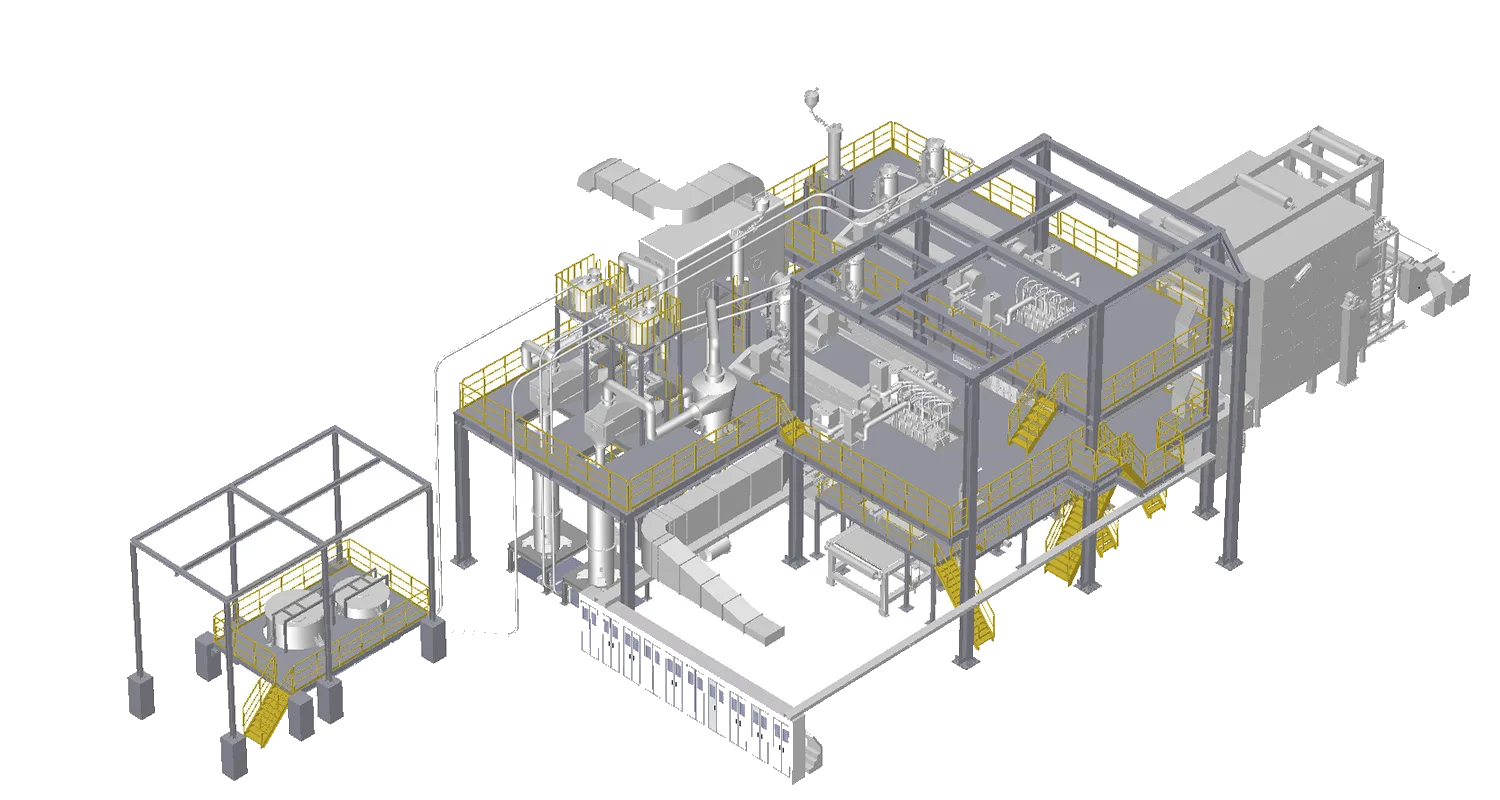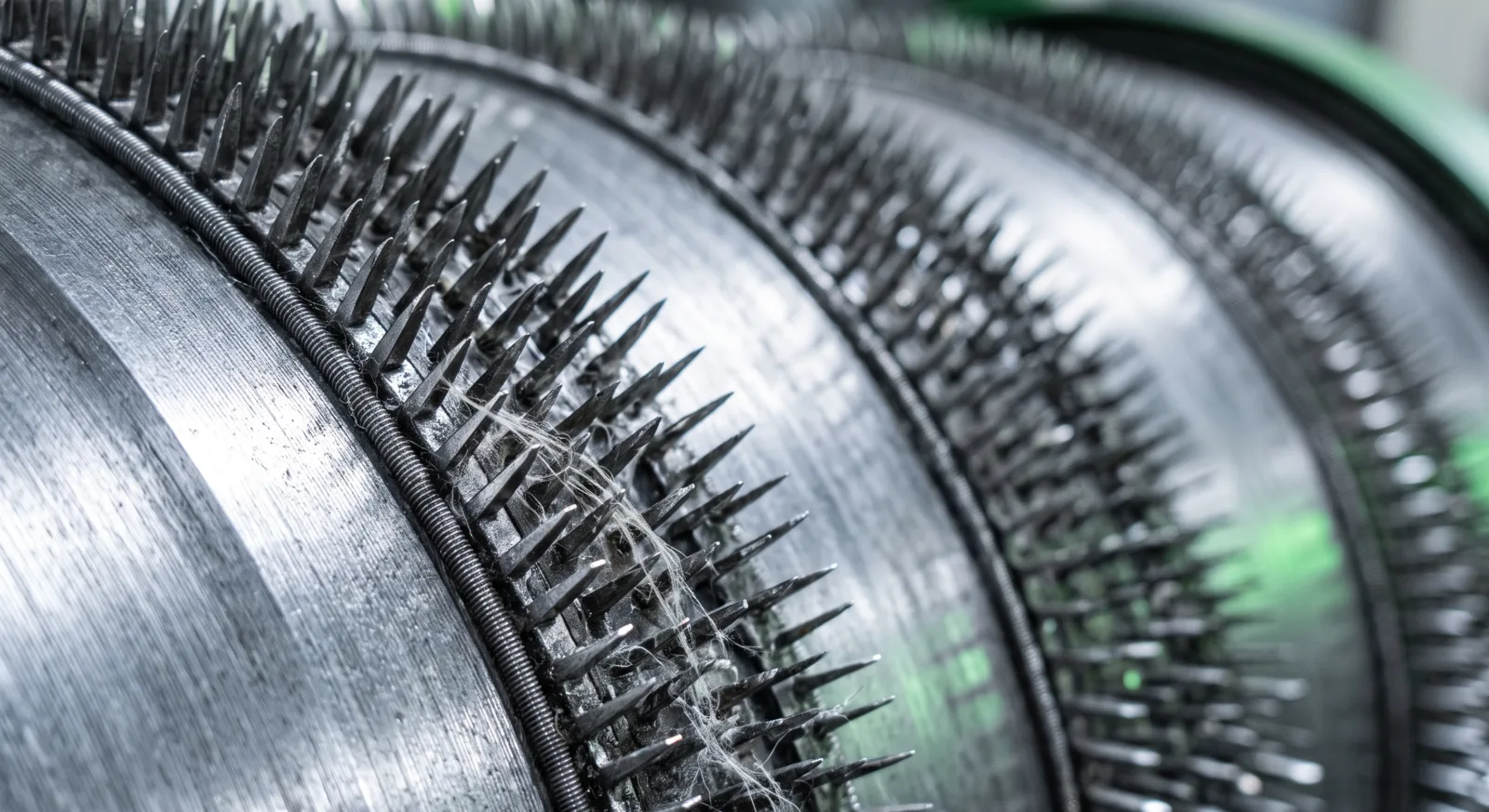
Card clothing (Nonwoven Carding Wire) is a system of fine steel wire teeth wound around the rollers of a carding machine in a needle-punch nonwoven fabric production line. These rollers work together to open the fibers, align them into parallel formation, and build an even fiber web — the foundation that feeds into the needle-punching stage.
The role of card clothing in a needle-punch line
- Opens and loosens the raw fiber.
- Aligns fibers in parallel so they form a web easily.
- Distributes fiber evenly across the cylinder surface.
- Removes impurities and defective fibers.
- Forms a continuous, stable fiber web.
Construction and layout
Card clothing is made from hardened, wear-resistant alloy steel wire with evenly spaced, sharp teeth. It’s wound around several different rollers inside the carding machine, each one handling a specific job:
- Feeder roller: feeds fiber from the feed unit into the carding machine.
- Cleaner roller: removes impurities and defective fibers.
- Licker-in roller: opens up and disperses large fiber tufts.
- Breast cylinder: gives the fiber an initial carding pass before the main cylinder.
- Main cylinder: the main drum — aligns fibers in parallel and spreads them out.
- Worker & Stripper rollers: work together to thin and even out the fiber web.
- Transfer roller: moves fiber between rollers.
- Condenser roller: gathers and stabilizes the fiber layer.
- Doffer roller: strips the fiber web off the main cylinder.
- Take-off roller: carries the web out of the carding machine.
- Random roller: distributes fiber randomly to boost uniformity.
Card clothing by position: cylinder wire, flat tops, stationary flats
On the shop floor, card clothing is usually named after where it sits on the card rather than by its formal type. The table maps the common names to what they are:
| Common name | Technical name and position on the card |
|---|---|
| Cylinder wire | Cylinder card clothing — covers the main cylinder, the card’s primary working roller |
| Flat tops | Top flats card clothing — sits on the flat bars above the main cylinder |
| Stationary flats | Stationary flat card clothing — non-moving bars set around the carding zone |
| Flexible wire | Flexible card clothing — pliable fabric foundation that conforms to the roller |
| Metallic wire | Metallic card clothing — one-piece sawtooth wire; separate series for non-woven, cotton-spun and woolen |
| Circular comb | Circular comb — used on the combing stage |
The same part often carries several names depending on the plant and the machine brand. When ordering, the reliable approach is to send the carding machine model, the roller position being replaced and the fiber you are running — see White Shark card clothing & carding wire for the range available.
Key technical specifications of card clothing
- Working Angle: determines how well the wire grips, holds, and cards the fiber. A small angle gives gentler carding with less fiber breakage. A large angle gives stronger fiber-opening action, suited to coarse fiber.
- Rib Thickness: the thickness of the wire’s base. Thicker wire is more durable and suited to coarse fiber. Thinner wire is finer and suited to delicate fiber.
- Total Height: measured from the base to the tip of the wire. It affects how deep the wire penetrates the fiber and how durable it is during carding.
- Pitch: the spacing between consecutive wire teeth. A small pitch gives a denser wire population and a finer web. A large pitch gives a sparser density, suited to coarse fiber.
- Point density (PPSI – Points Per Square Inch): the number of wire points per square inch. High PPSI gives thorough carding and a finer web. Low PPSI suits longer fiber and a thicker web.
- Surface Finish: polishing, chrome plating, or other special anti-corrosion treatment. It affects service life and carding performance.
Classifying nonwoven carding wire
- By tooth density:
- Sparse: suited to coarse, long fiber.
- Dense: suited to fine fiber that needs a smooth web.
- By tooth angle:
- Small angle: limits fiber breakage, for fine fiber.
- Large angle: speeds up fiber opening, for coarse fiber.
- By position of use:
- Carding wire for the feeder, licker-in, and breast cylinder.
- Carding wire for the main cylinder, worker, and stripper.
- Carding wire for the doffer, transfer, condenser, take-off, and random rollers.
Applications in needle-punch nonwoven production
- Builds an even fiber web before the cross lapper.
- Improves the uniformity of the finished fabric.
- Directly determines the strength and surface quality of the nonwoven fabric.
Selection and maintenance notes
- Choose carding wire based on the raw material (PET, PP, viscose, recycled fiber).
- Maintain and clean it regularly to prevent fiber buildup.
- Replace it once the teeth become worn or bent.
- Keep every roller calibrated together to maintain a stable web.
Mounting card clothing: tension, pitch and when to re-wire
Mounting is the job of wrapping card clothing onto a carding roller, and it shapes carding quality as much as the wire itself. Done right, the teeth sit evenly across the whole roller surface and take fiber consistently. Wrong tension or wrong pitch leaves the wire overlapping or gapped, the web comes out uneven, and the wire wears faster than it should.
Two parameters to control while mounting:
- Tension. The wire must seat flat against the roller from start to finish. Too loose and it lifts as the roller spins at speed; too tight and the foundation distorts.
- Pitch. The spacing between adjacent turns has to be right so the points-per-square-inch on the roller matches the design figure — the same spec covered above.
Signs the wire needs replacing or re-mounting:
- Teeth are worn, flattened or bent out of their original shape.
- The web leaving the card is no longer even, showing heavy and light bands across the width.
- Fiber builds up and wraps around the roller more than usual.
There is no fixed interval that fits every plant: it depends on fiber type (recycled and coarse fiber abrade wire faster), fabric weight, running speed and machine hours. Have an engineer inspect the tooth condition directly rather than replacing on a guessed schedule. Vina Nonwoven provides card-clothing mounting at the customer’s plant, including inspection and re-calibration of the rollers afterwards.
Conclusion
Card clothing is a critical wear part in a needle-punch line. Each roller has its own carding-wire system with a distinct role, but all of them work toward the same goal: an even fiber web. Beyond choosing the right type of carding wire, manufacturers need to pay attention to technical specs like Working Angle, Rib Thickness, Total Height, Pitch, PPSI, and Surface Finish. Managing carding wire well means better fabric quality and better line performance.
Vina Nonwoven supplies genuine White Shark card clothing & carding wire in Vietnam and offers a card-wire mounting service onto the rollers — with advice on the right type for your machine and fiber, plus components & spare parts for the wear parts. Contact us by hotline or Zalo for a quote.