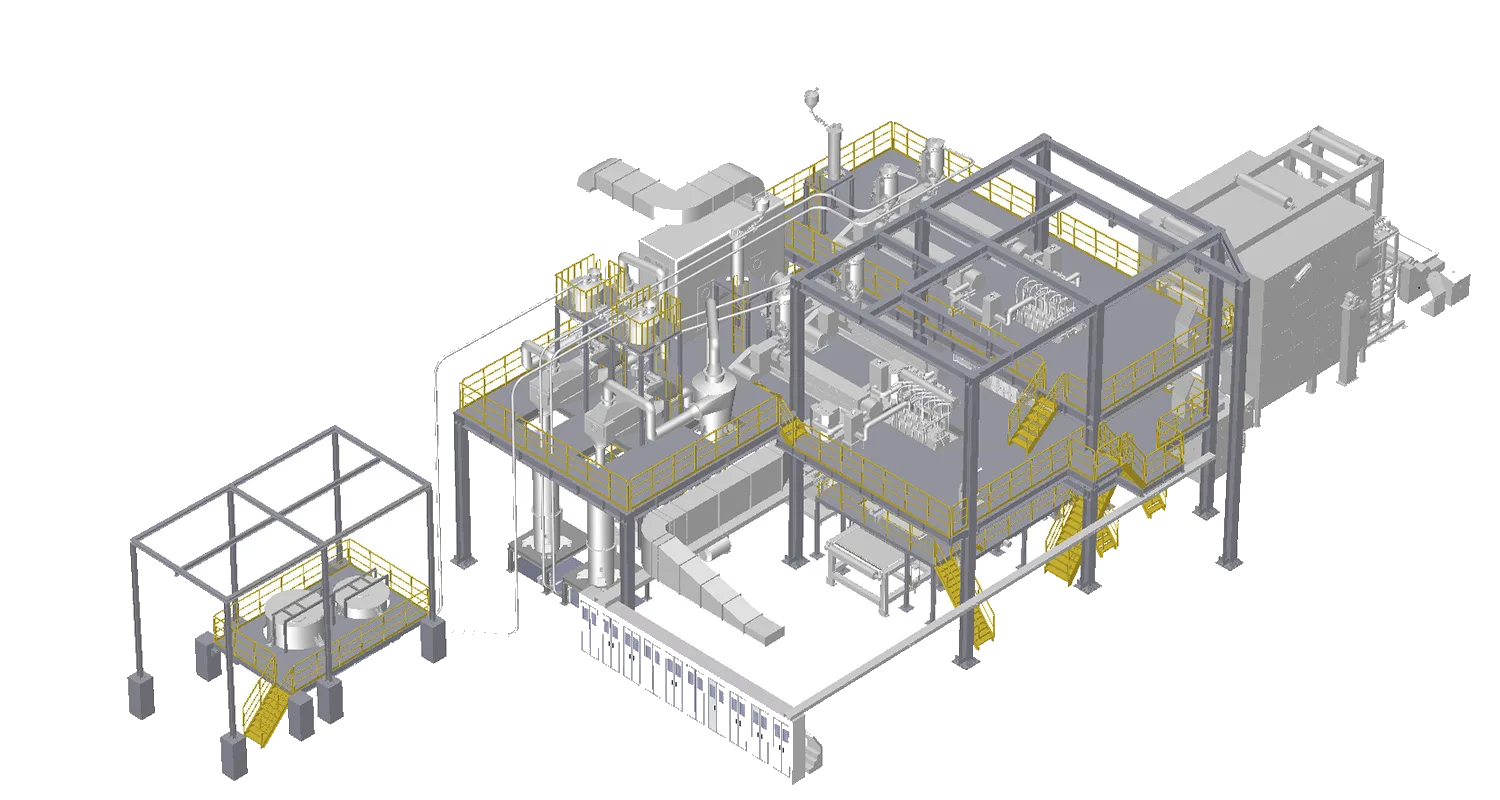
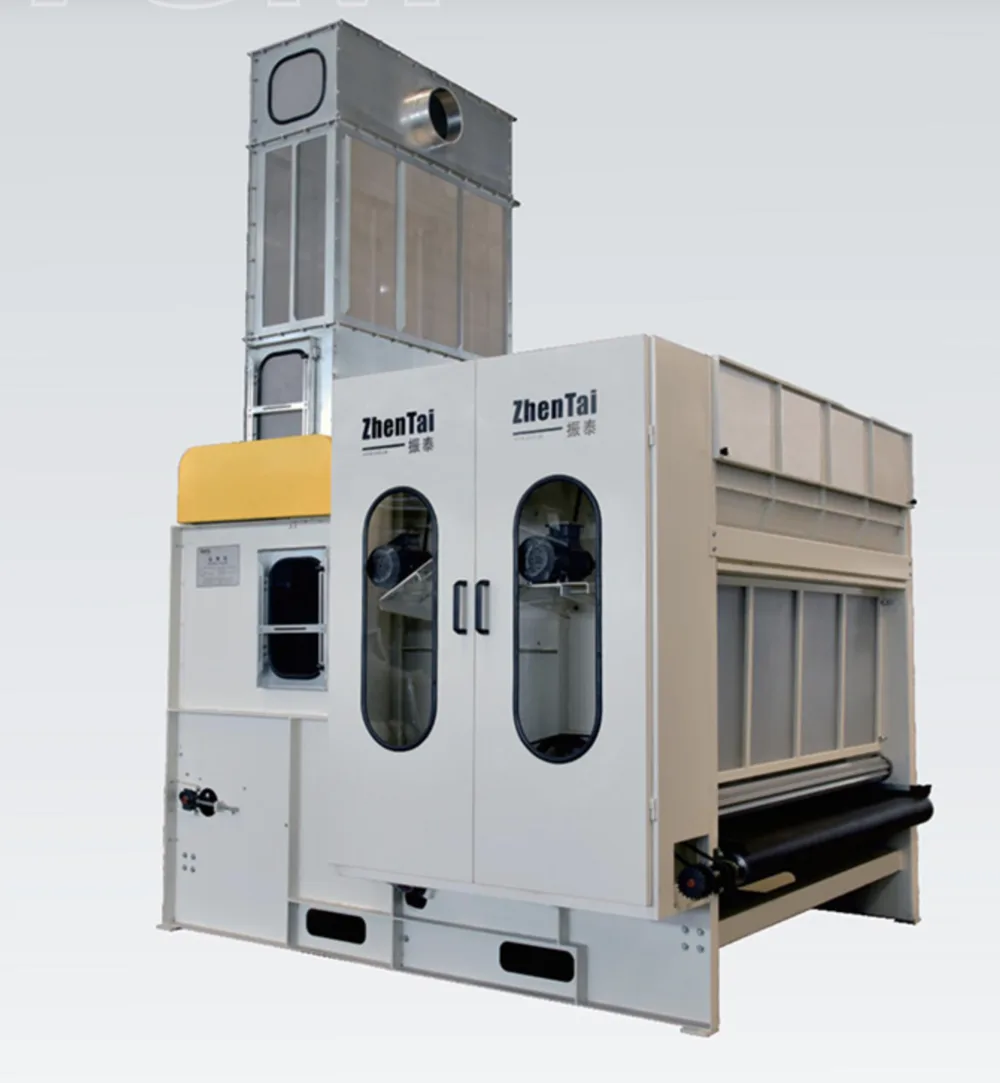
A carding feeder — the fiber feeder for a carding machine, or the feeder of a needle-punch nonwoven line — is the input device of the needle-punch nonwoven production line. Its main function is to distribute and meter fiber from the opener or blender into the carding machine, keeping the incoming fiber web stable, uniform in weight, and free of blockages.
Basic Structure of a Carding Feeder
- Conveyor Belt: carries raw fiber from the opening system into the feeding chamber.
- Feeding Chamber: holds and distributes fiber in preset amounts.
- Feeding Roller: controls the flow of fiber leaving the chamber.
- Weight Sensor: continuously measures and adjusts the fiber quantity.
- Output Conveyor: transfers the even fiber web to the carding machine.
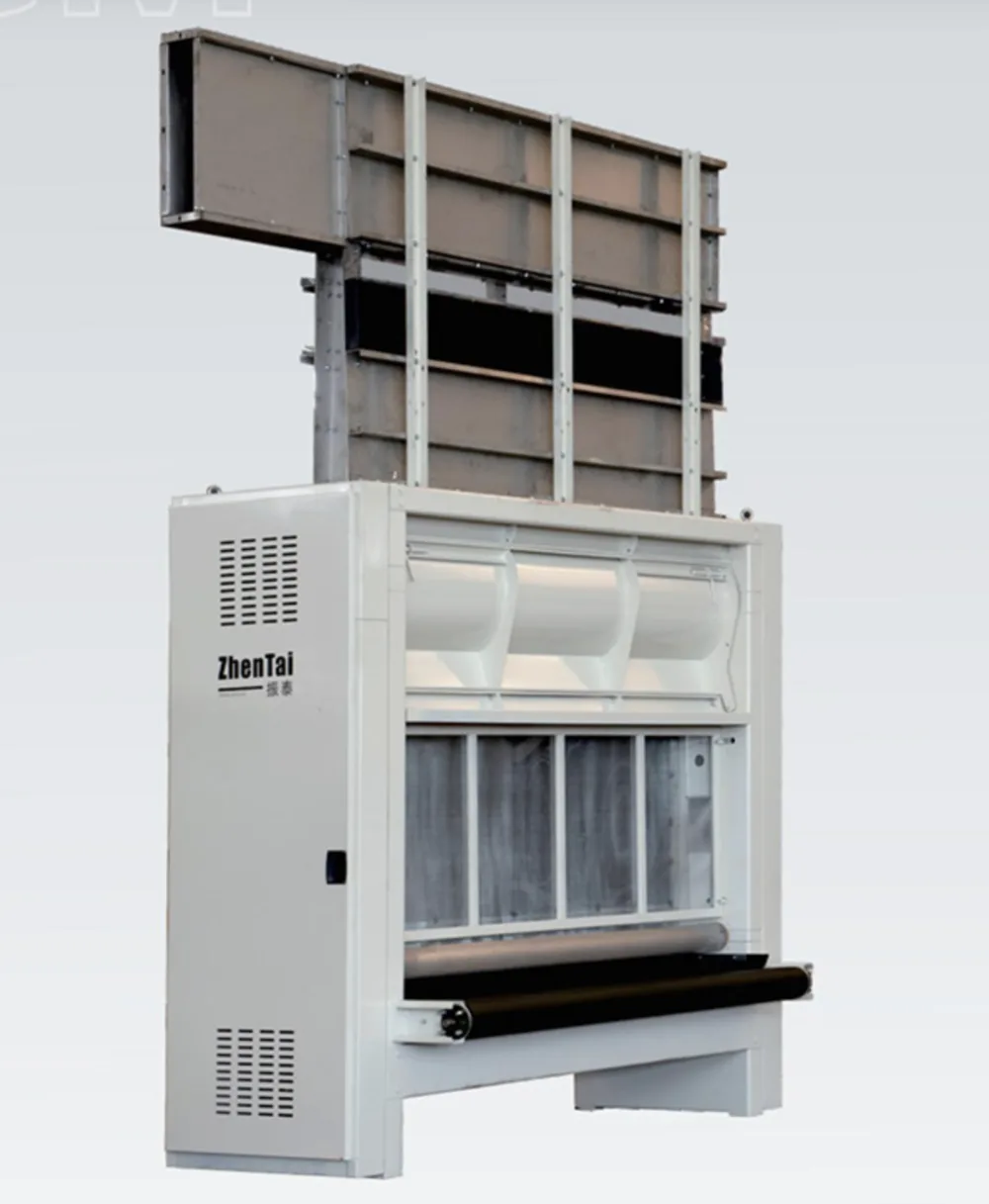
Carding feeder for the carding machine
How a Feeder Works
Fiber is fed continuously into the feeding chamber, where the weight sensor and feeding roller work together to control conveyor speed and keep output weight stable. When the outgoing fiber web is thicker or thinner than the standard, the system automatically adjusts roller and conveyor speed to compensate for the deviation.
Factors That Affect Feeder Performance
- Accuracy of the weight sensor: the single most important factor for stable GSM.
- Conveyor and feeding-roller speed: must be synchronized to avoid metering fluctuations.
- Fiber type: recycled or short staple fiber is prone to clogging and unevenness.
- Feeding chamber design: affects how well the fiber disperses.
- System cleanliness: fiber dust or residual fiber buildup easily throws off sensor readings.
Common Faults When Operating a Feeder
- Uneven outgoing fiber web:
- Cause: faulty, dust-coated, or miscalibrated weight sensor.
- Fix: clean the sensor, check the control signal, and recalibrate on a regular schedule.
- Fiber clogging in the feeding chamber:
- Cause: damp fiber or fiber with low elasticity.
- Fix: adjust roller speed and control raw-material moisture.
- Deviation from the target weight:
- Cause: sensor value drift, conveyor belt slippage.
- Fix: inspect the mechanical parts, and calibrate the PLC and sensor.
- Cyclical fiber fluctuation:
- Cause: conveyor and roller speeds out of sync.
- Fix: synchronize the speed-control loop.
- Uneven fabric weight across the full width of the fabric (heavy spots, light spots — random):
- This is a very common fault in needle-punch nonwoven production, especially on lines using conventional feeders.
- Main cause: the feeder distributes fiber unevenly, and the sensor responds too slowly or the line lacks a self-correcting control system.
- Impact: unstable fabric GSM, which creates difficulties for the cross lapper and the needle loom.
- Fix:
- Use a feeder with a high-precision weight sensor (load cell + feedback control).
- Apply continuous automatic weight-control technology.
- Choose a new-generation European feeder capable of finer, more stable fiber distribution.
How to Optimize Feeder Operation
- Calibrate the weight sensor on a regular schedule.
- Keep roller and conveyor speeds synchronized.
- Use raw material with consistent length and fineness.
- Clean the system regularly to avoid signal interference.
- Prioritize machines with automatic PLC control and an online GSM sensor to reduce weight deviation.
Conclusion
The carding feeder is the first stage of the line and has the strongest influence on nonwoven fabric quality. An accurate, even, and automated feeding system keeps the fiber web stable and boosts the performance of both the carding machine and the entire needle-punch line.
Vina Nonwoven is the distributor of nonwoven production-line machinery in Vietnam — supplying carding feeders, carding machines, and card clothing for the carder, with installation, maintenance, and warranty handled in Vietnam. The site does not list online prices; contact us by hotline or Zalo for advice and a quote.