The short answer: woven geotextile is strongest in tensile strength at low elongation, so it is the choice for reinforcing and stabilising the ground under roads and yards. Needle-punched nonwoven geotextile is strongest in permeability, thickness and puncture resistance, so it is the choice for filtration, drainage, erosion control and protecting geomembranes. This guide compares the two for whoever specifies the fabric, then goes a step further than most fabric sellers do: how each type is manufactured, and what that means if you are planning to produce geotextile yourself.
Quick answer: when to use which
- Choose woven when the fabric has to carry tensile load without stretching much: soft-ground reinforcement, road base stabilisation, container yards, storage areas, and embankments that need extra strength.
- Choose needle-punched nonwoven when the fabric has to let water through while holding soil back: filtration behind retaining walls, wrapping around drain pipes, under rock armour for erosion control, and as a cushion layer over HDPE liners in landfills and reservoirs.
- Separation (keeping aggregate out of the subgrade) can be done with either. Heavy loads lean towards woven; sites that need good drainage lean towards nonwoven.
Put simply: woven is mostly about reinforcement, nonwoven is mostly about filtration and drainage.
What is woven geotextile?
Woven geotextile is made from PP (sometimes PET) yarns interlaced in two directions, much like ordinary cloth but with far heavier, stronger yarns. There are two main kinds:
- Slit-film woven: the yarns are thin flat tapes of PP film. Low cost and good strength, but low permeability. Mostly used for separation and stabilisation.
- Multifilament woven: each yarn is a bundle of fine filaments. Higher strength and better water flow than slit-film, used where reinforcement demands are higher.
Because the yarns are drawn and woven tight, woven fabric reaches high tensile strength at low strain, which is why it is picked when the fabric must take load. The trade-off is a small, regular open area, so it filters and drains less well than nonwoven.
What is needle-punched nonwoven geotextile?
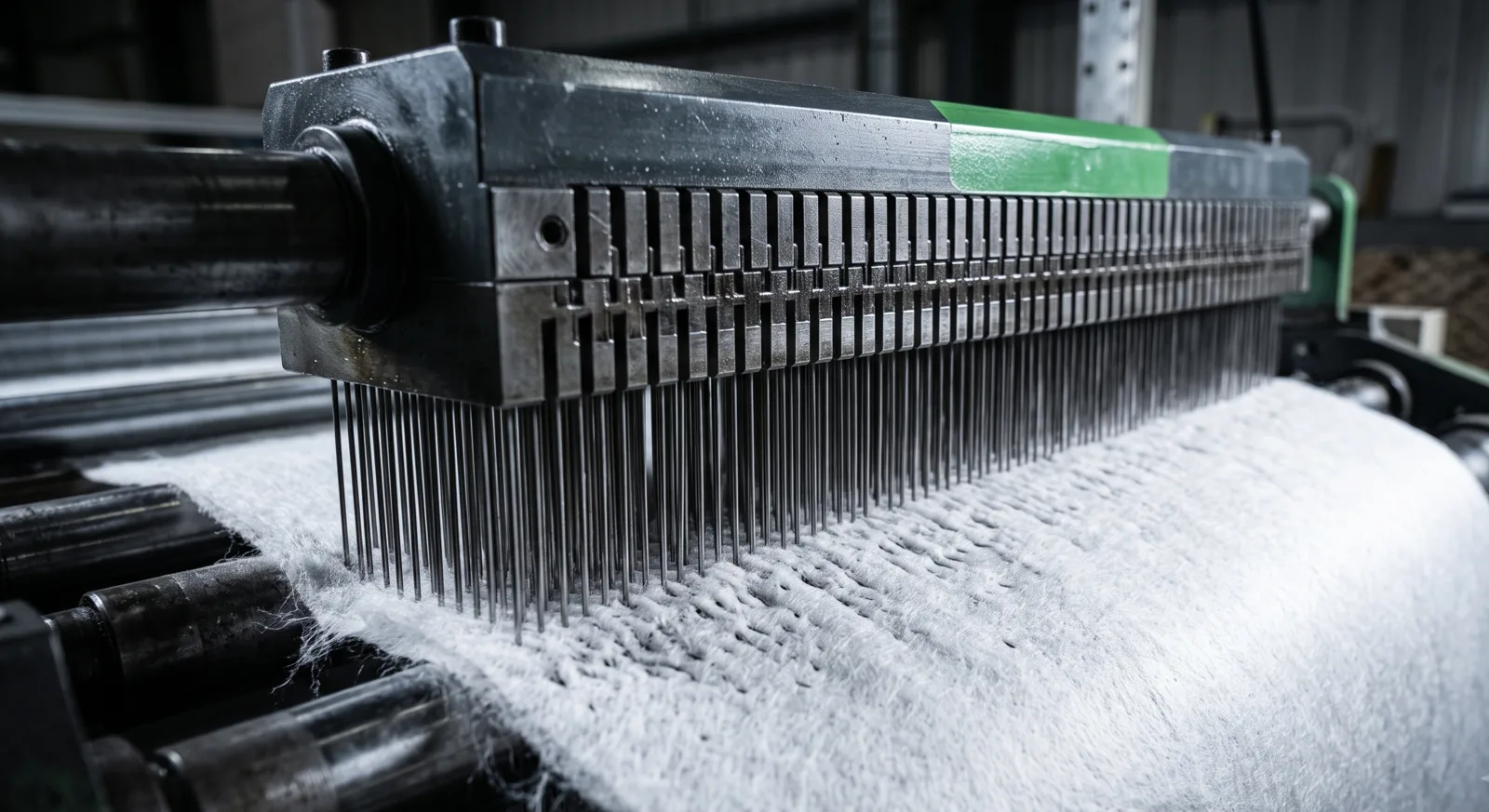
Needle-punched nonwoven is made from staple fibres, usually PET or PP. Layers of fibre web are punched by thousands of barbed needles that hook the fibres together into a thick, porous sheet, with no glue or chemical binder.
That three-dimensional fibre structure gives it a different set of properties:
- High permeability: water passes through the fabric and also along its plane, so it can both filter and carry water.
- Thick and conformable: it follows uneven ground and resists puncture, which makes it a good protection layer for geomembranes.
- Higher elongation than woven, so it can follow ground movement without tearing.
The relative weakness: at the same weight, its tensile strength at low strain is lower than woven, so it is seldom the main reinforcement layer.
Comparison table
| Criterion | Woven geotextile | Needle-punched nonwoven geotextile |
|---|---|---|
| Structure | Yarns interlaced at right angles | Entangled staple fibres bonded by needles |
| Raw material | PP/PET slit-film tape or multifilament yarn | PET or PP staple fibre |
| Tensile strength | High, low elongation | Moderate, high elongation |
| Permeability | Low | High, including in-plane flow |
| Puncture resistance, cushioning | Limited | Good |
| Main functions | Reinforcement, stabilisation, separation | Filtration, drainage, protection, erosion control, separation |
| Typical uses | Road bases, yards, soft ground | Retaining walls, drain pipes, revetments, landfills, reservoirs |
How woven geotextile is made
Woven geotextile comes from two separate groups of machines:
- Yarn production: PP chips are extruded into film, slit into tapes, stretched for strength and wound onto bobbins (for slit-film), or extruded and drawn into multifilament yarn.
- Weaving: the yarns go onto wide looms and are woven to the required density, then edge-trimmed and rolled.
A typical woven plant runs one yarn line feeding many looms in parallel. To change product, the plant changes yarn denier and weave density.
How nonwoven geotextile is made
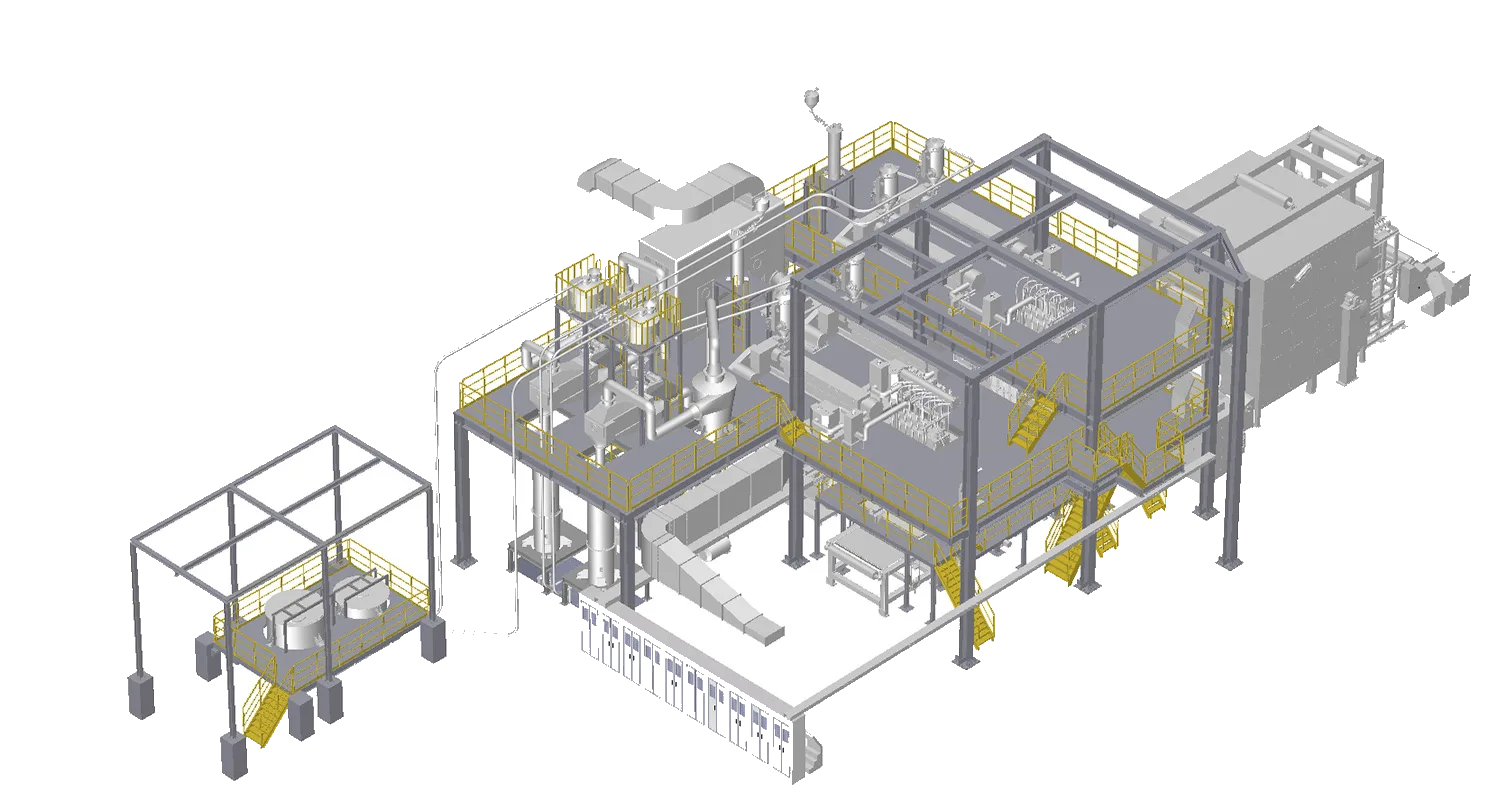
Nonwoven geotextile is made on one continuous line, from fibre to finished roll. With needle-punch technology:
- Opening and blending: PET or PP fibre bales are opened and mixed evenly.
- Carding: the fibre is carded into a thin, even web.
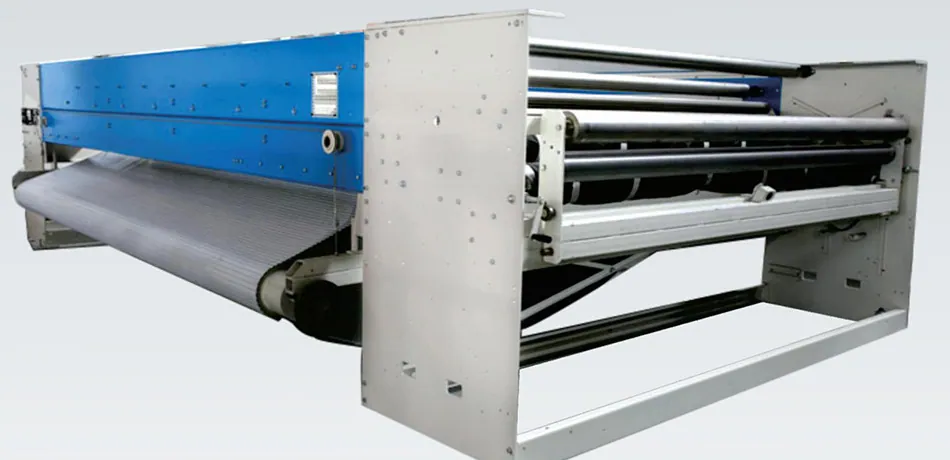
- Cross lapping: a cross lapper folds the web into many layers, which sets the fabric weight and width.
- Needle punching: a needle loom bonds the layers with barbed needles, usually across several looms in sequence.
- Calendering or heat setting: stabilises the surface and dimensions.
- Winding: rolls up the finished fabric.
Each machine is covered in which machine makes geotextile fabric.
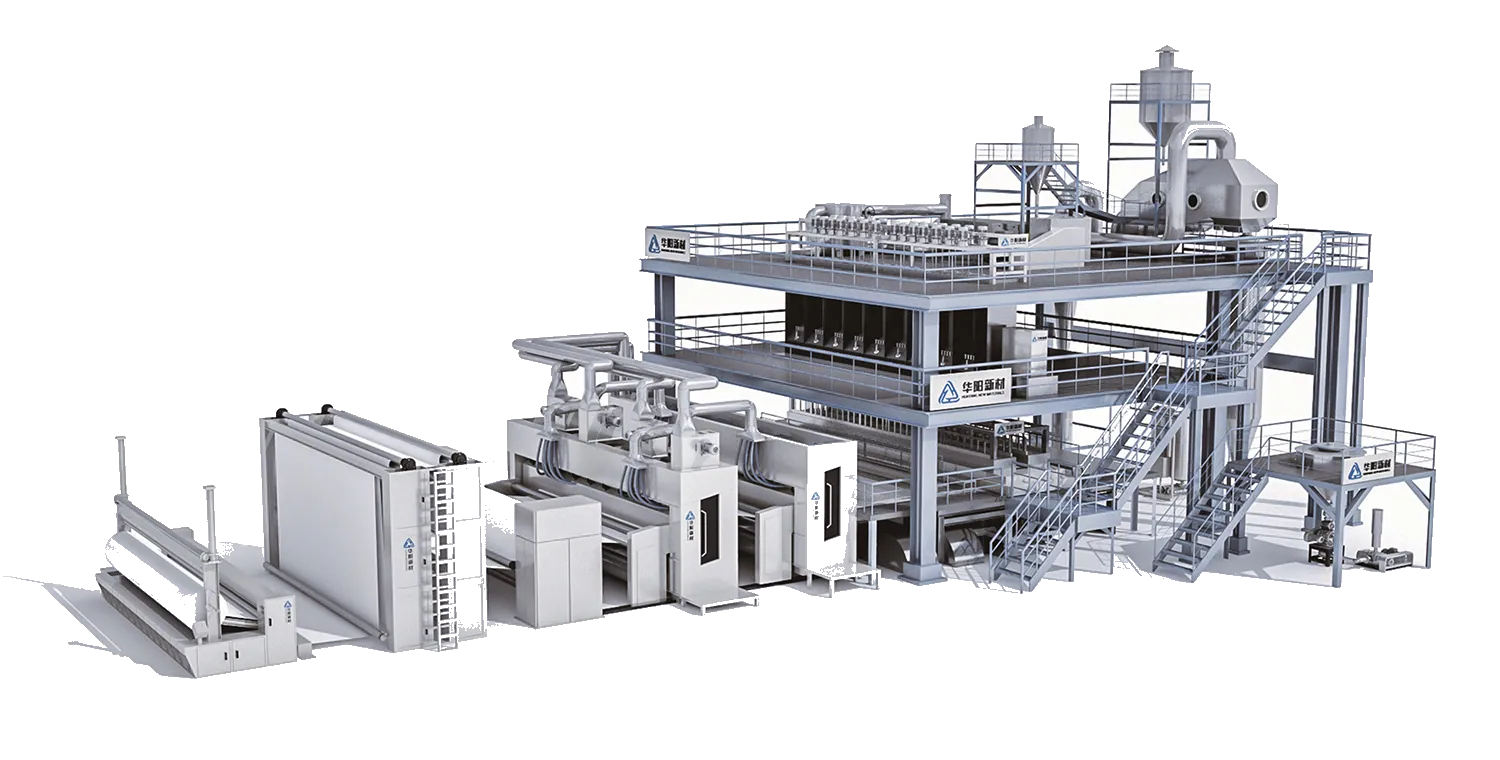
The second route is PET spunbond: PET chips are melted, spun into continuous filaments, laid into a web and then needle punched. Continuous-filament geotextile made this way starts straight from polymer and skips buying fibre, carding and cross lapping. For a side-by-side of the two nonwoven technologies, see needle punch vs spunbond.
What this means for an investor
If you are weighing up a geotextile plant, the production differences matter as much as the fabric properties:
- Line type: woven needs a yarn line plus a bank of looms; needle-punched nonwoven is one integrated line; PET spunbond is a larger line that starts from polymer chips.
- GSM flexibility: on a needle-punch line, weight is changed mainly through the number of lapped layers and the line speed, so one line can make both light and heavy fabric. Spunbond lines also cover a wide range: the PET spunbond geotextile production line we supply is specified for 100 to 800 g/m², in 4.5 m, 6.2 m or 7.0 m working widths.
- Raw material: needle punch runs on PET or PP staple fibre, which you can buy in, including recycled PET fibre. PP is lighter and has good chemical resistance; PET handles heat better and creeps less under long-term load. Spunbond runs on PET chips.
- Capacity and width: set by machine width and the number of needle looms. Our Zhentai geotextile production line is built to order in working widths from 4 m to 8 m.
There is no fixed investment figure: cost depends on width, GSM range, capacity and level of automation.
Where Vina Nonwoven fits
To save you time: Vina Nonwoven does not supply tape extrusion lines or weaving looms for woven geotextile. We are the Vietnam distributor of needle-punch nonwoven production lines (Zhentai) and PET spunbond lines (Huayang), the two technologies used to make nonwoven geotextile, with spare parts, installation and maintenance in-country.
If you plan to produce nonwoven geotextile, tell us the fabric type, GSM range and target capacity, and our engineers will propose a configuration and send a quote. Contact Vina Nonwoven, or call the hotline or message us on Zalo to get started.