Non-woven bags (referred to in Vietnam as túi vải không dệt) have become the premier eco-friendly packaging alternative to single-use plastic bags across retail, corporate promotions, apparel, and export supply chains. Combining high tensile strength, lightweight portability, and vibrant branding potential, non-woven bags also offer significant environmental advantages: unlike polyethene (PE) plastic that persists in landfills for centuries, polypropylene (PP) non-woven bags naturally degrade within 3 to 5 years when exposed to outdoor soil and UV light.
Whether you are sourcing bags from manufacturing centers like Ho Chi Minh City (TPHCM), evaluating custom logo printing, or investing in the underlying industrial fabric production machinery, this guide breaks down everything you need to know about non-woven bags, from material specifications to factory-scale production lines.
1. What is a Non-Woven Bag? (Definition & Material Science)
A non-woven bag is a reusable carrier bag made from polypropylene (PP) non-woven fabric. Traditional woven fabrics require spinning staple fibers into yarn and subsequently interlacing those yarns on weaving looms or knitting machines. In contrast, non-woven fabric bypasses the spinning and weaving stages entirely: continuous extruded synthetic filaments are entangled and fused together using heat and mechanical pressure (the Spunbond process).
The resulting material features a uniform, cloth-like sheet surface embossed with microscopic textured patterns (commonly sesame dots or diamond grids). These embossed points give the fabric its characteristic tear resistance and structural rigidity.
Key Advantages of Non-Woven Bags:
- Eco-Friendly & Biodegradable: Polypropylene nonwoven fabric breaks down into non-toxic granular carbon and hydrogen compounds within 3 to 5 years under natural outdoor weathering, leaving zero permanent plastic residues.
- Durable & Highly Reusable: Washable, breathable, and water-repellent, a standard bag can be reused over 100 times without tearing or losing its shape.
- Superior Load Capacity: A standard 80 GSM non-woven shopping bag comfortably supports loads from 5 kg up to 15 kg without handle failure.
- Excellent Printable Surface: The porous web texture absorbs printing inks and coatings exceptionally well, enabling crisp corporate logos and multi-color promotional artwork.
2. Terminology: What is “Túi Vải Không Dệt” in English?
In international trade, customs declarations (HS Code 4202 / 6305), and OEM sourcing agreements, “túi vải không dệt” corresponds to several precise English terms depending on design and context:
- Non-Woven Bag / Nonwoven Bag: The universal, industry-standard generic term.
- PP Non-Woven Bag (Polypropylene Non-Woven Bag): The precise technical specification denoting spunbond polypropylene material.
- Non-Woven Tote Bag: A shopping bag fitted with top loop handles, ideal for grocery retail, exhibitions, and brand giveaways.
- Drawstring Non-Woven Bag (túi vải không dệt dây rút): A pouch or cinch backpack closed by pulling cords at the top, widely used for shoes, cosmetics, and sports gear.
- Die-Cut Handle Bag (túi hột xoài): A flat pouch with an oval punched handle directly in the fabric body.
- Eco Bag / Reusable Shopping Bag: Commercial green-marketing designations emphasizing sustainability.
What is the HS Code for Non-Woven Bags and Fabric Rolls?
In international trade compliance, customs tariff scheduling, and freight documentation, non-woven packaging and production assets are classified under specific HS (Harmonized System) Codes:
| Commodity Category | Reference HS Code | Tariff Schedule Description |
|---|---|---|
| Finished Non-Woven Bags (Totes, Drawstrings, Shopping Bags) | 4202.92.00 | Traveling bags, shopping bags, and containers with outer surface of textile materials / nonwoven polymer sheeting. |
| Industrial Packing Sacks & Bags | 6305.33.00 or 6305.39 | Sacks and bags of a kind used for the packing of goods, made from man-made textile materials (PP/PE). |
| PP Spunbond Fabric Rolls (25 – 70 GSM) | 5603.12 | Nonwovens of man-made continuous filaments, weighing more than 25 g/m² but not more than 70 g/m² (hygiene, light bags). |
| PP Spunbond Fabric Rolls (70 – 150 GSM) | 5603.13 | Nonwovens of man-made continuous filaments, weighing more than 70 g/m² but not more than 150 g/m² (benchmark shopping totes). |
| Spunbond Nonwoven Production Line Machinery | 8449.00 or 8477.20 | Industrial machinery for manufacturing nonwovens in rolls and polymer screw extruders for continuous filament spinning. |
When contracting with international suppliers or arranging export freight, specify “PP non-woven bag” alongside the appropriate HS code, fabric GSM, and detailed dimensions.
3. Major Styles and Construction Methods
Depending on end-use application, payload requirements, and budget, non-woven bags are fabricated in several distinct configurations:
A. Box-Gusset Tote Bags (With Loop Handles)
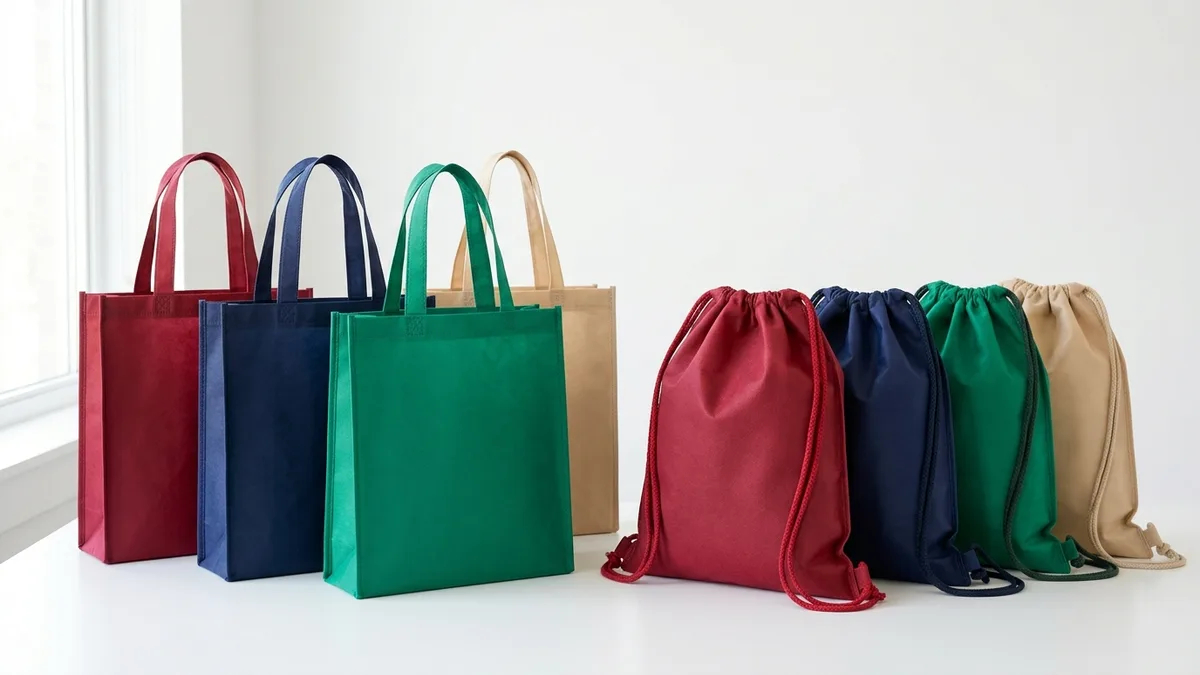
The most ubiquitous design in supermarkets and international conferences. Featuring side and bottom gussets (creases) that expand to hold bulky merchandise, these bags stand upright on checkout counters. Standard fabric weight is 70 to 100 GSM.
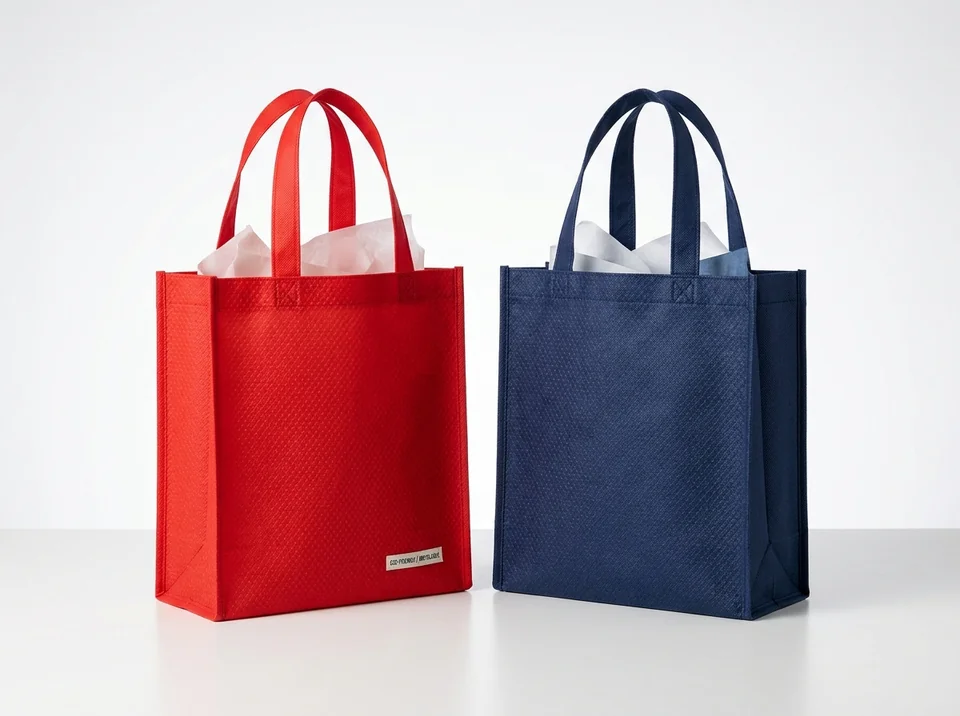 Figure 1: Premium box-gusset non-woven tote bags with reinforced loop handles and embossed sesame texture, popular for supermarket retail and corporate conference giveaways.
B. Drawstring Non-Woven Bags (Túi Vải Không Dệt Dây Rút)
Engineered with a stitched or heat-welded channel at the opening through which a nylon or cotton drawcord is threaded. Pulling the cords cinches the mouth shut instantly. Primary applications include:
- Anti-dust protective dustbags for luxury footwear, leather handbags, and electronics.
- Lightweight cinch-sack backpacks for marathons, fitness clubs, and university events.
- Premium pouches for jewellery, cosmetics, and organic gifts.
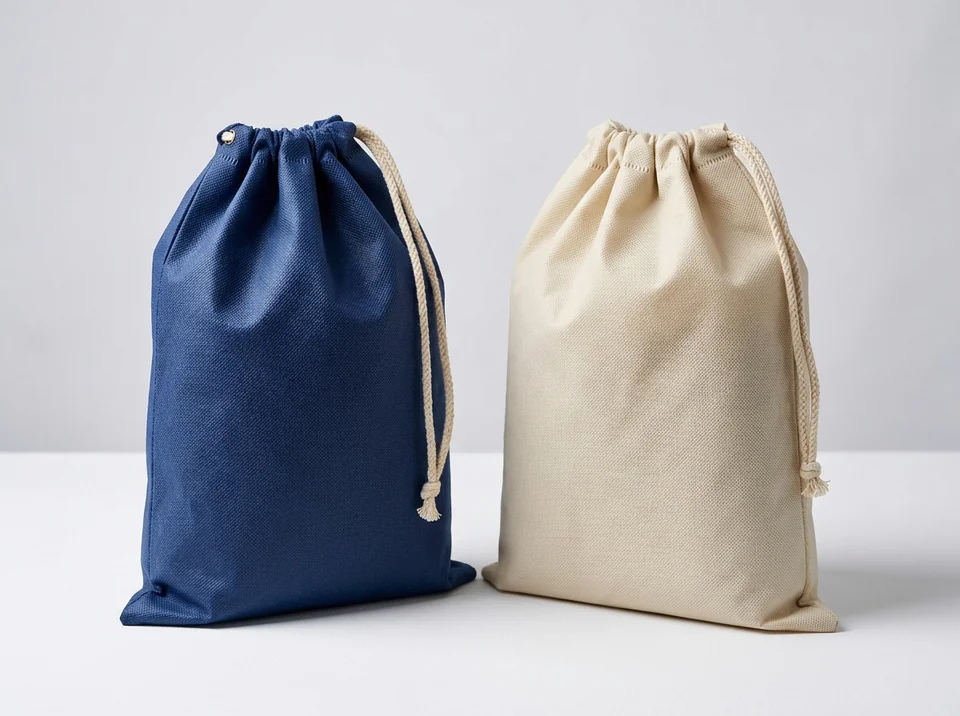 Figure 2: Multi-purpose non-woven drawstring bags (cinch pouches) with braided drawcords, protecting footwear, cosmetics, and gifts against dust and abrasion.
C. Die-Cut Handle Bags
Manufactured as flat rectangular sheets with an oval cut-out handle reinforced near the top edge. Highly cost-effective and compact, they are favored by apparel boutiques, optical shops, and pharmacies.
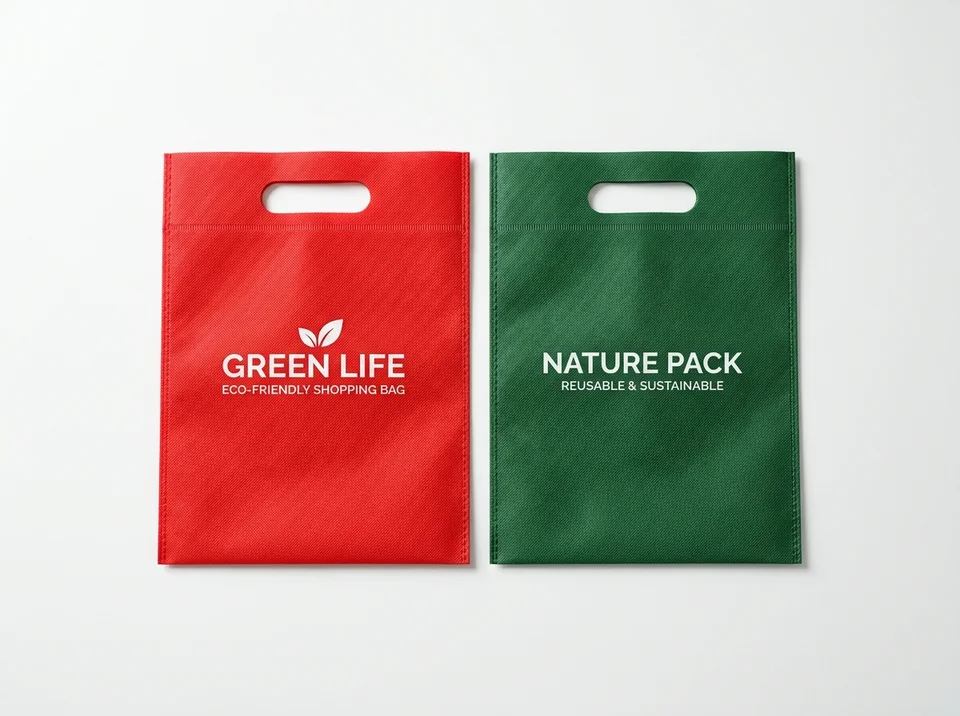 Figure 3: Flat die-cut handle non-woven bags with custom printed branding, offering an economical and eco-friendly packaging alternative for fashion boutiques and pharmacies.
D. Stitched Assembly vs. Ultrasonic Heat-Sealed Assembly
- Traditional Stitched Bags (Sewn): Edges and handles are joined using industrial lockstitch sewing machines. Offers the greatest mechanical load-bearing capacity (up to 15–20 kg), but requires significant manual labor.
- Ultrasonic Heat-Sealed Bags: Assembled on fully automated non-woven bag making machines using high-frequency ultrasonic horns that melt and weld the PP seams instantaneously. Ultrasonic bags deliver immaculate edge seals and rapid output (up to 60–100 bags per minute), substantially reducing unit costs for large volume orders.
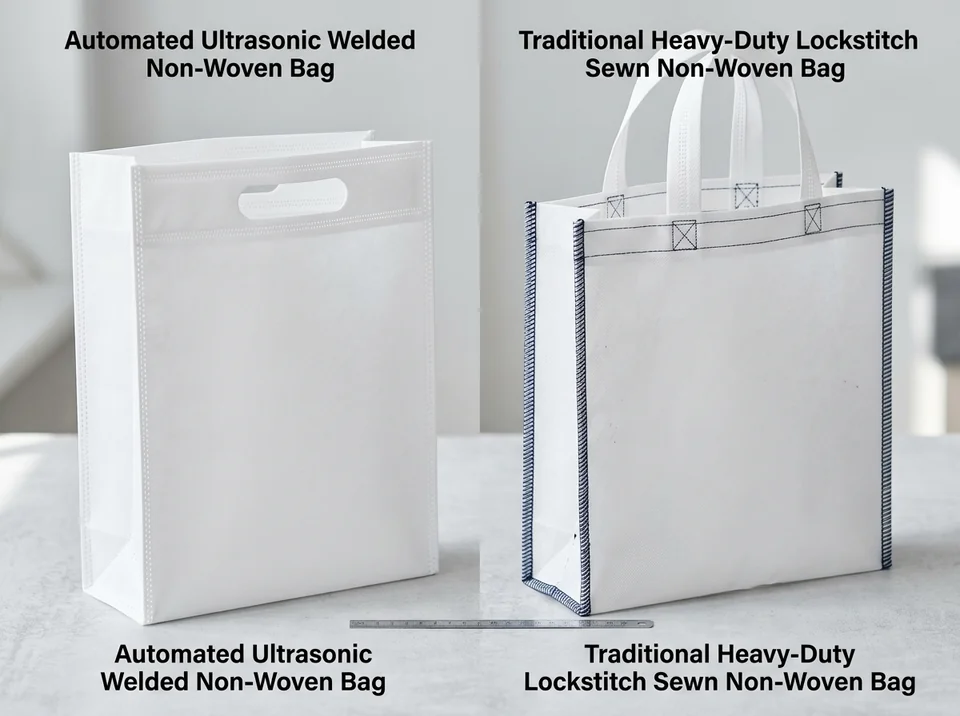 Figure 4: Side-by-side comparison: High-speed automated ultrasonic heat-sealed seam (left) vs. traditional heavy-duty lockstitch industrial needle sewing (right).
4. Color Varieties: Why Red Non-Woven Bags (Màu Đỏ) Are in High Demand
Non-woven fabric is available in an extensive spectrum of vibrant shades because colored polymer granules (Color Masterbatch) are blended directly into the molten polypropylene before extrusion:
- Red Non-Woven Bags (Túi vải không dệt màu đỏ): Represents one of the highest search volumes in Southeast Asia and Vietnam. Red signifies prosperity, good fortune, and energy. It is the dominant choice for Lunar New Year (Tet) gift packaging, grand opening ceremonies, and festive promotional campaigns, pairing dramatically with metallic gold or white printed logos.
- Royal & Navy Blue: Widely favored by banking institutions, logistics companies, and corporate technology brands to convey trust and reliability.
- Emerald Green: The hallmark of organic food markets, eco-friendly consumer brands, and “Go Green” campaigns.
- Black & Off-White: Clean, minimalist shades favored by upscale lifestyle brands and designer boutiques.
5. Logo Printing Techniques: Small Runs vs. Industrial Bulk
Custom logo branding converts functional packaging into a mobile brand ambassador. Printing methodology depends directly on order quantity:
Short-Run Printing / Low MOQ (100 – 500 Bags)
For startups, small retail boutiques, or private corporate events requiring low MOQ bag printing (in túi vải không dệt số lượng ít):
- Manual Screen Printing (Silkscreen): Inks are pressed through a tensioned mesh screen directly onto pre-fabricated blank bags. Very low setup and plate costs, making it ideal for 1- or 2-color vector logos in small quantities.
- DTF (Direct-to-Film) / Heat Transfer: Full-color gradient graphics and photo-quality designs are printed onto PET transfer films and heat-pressed onto the bag surface.
Mass Industrial Production (10,000+ Units)
For nationwide supermarket rollouts, multinational FMCG campaigns, or large export shipments:
- Laminated Rotogravure Printing (OPP Lamination): Photorealistic, high-resolution graphics (up to 8 colors) are printed onto an ultra-thin oriented polypropylene (OPP) film, which is subsequently heat-laminated to the non-woven base fabric. This technique produces 100% waterproof, glossy or matte luxury bags with unmatched durability.
- In-Line Flexographic Printing: Automated high-speed printing directly onto the moving fabric roll before feeding into automated ultrasonic bag-converting machines.
6. What Determines Non-Woven Bag Pricing?
When sourcing non-woven bags from manufacturers in Ho Chi Minh City (TPHCM) or broader industrial hubs, prices typically range from $0.15 to $0.65 USD (3,500đ – 15,000đ VND) per unit based on five technical parameters:
| Cost Driver | Impact on Unit Price | Specification Guidelines |
|---|---|---|
| Fabric Weight (GSM) | Thicker fabric consumes more virgin PP polymer per square meter. | • 60–70 GSM: Light promotional handouts, single-use event bags. • 80 GSM: The industry benchmark for durable shopping bags. • 100–120 GSM: Heavy-duty carryalls, wine bottle holders, luxury totes. |
| Dimensions (W × H × Gusset) | Surface area directly governs fabric consumption. | Optimize dimensions to standard roll widths to minimize edge trim waste during cutting. |
| Manufacturing Method | Automated ultrasonic welding is 20%–35% cheaper than manual stitching. | Ultrasonic welding for orders ≥ 5,000 units; manual stitching for complex heavy-duty bags. |
| Print Complexity & Colors | Each ink color requires a separate screen or engraved cylinder. | 1-color prints on 1 side yield the highest cost efficiency; full-surface lamination adds premium cost. |
| Order Volume (MOQ) | High volume amortizes machine setup times and plate manufacturing costs. | Orders over 5,000–10,000 units access the lowest factory-direct wholesale pricing. |
7. The Industrial Perspective: How is the Non-Woven Fabric Produced?
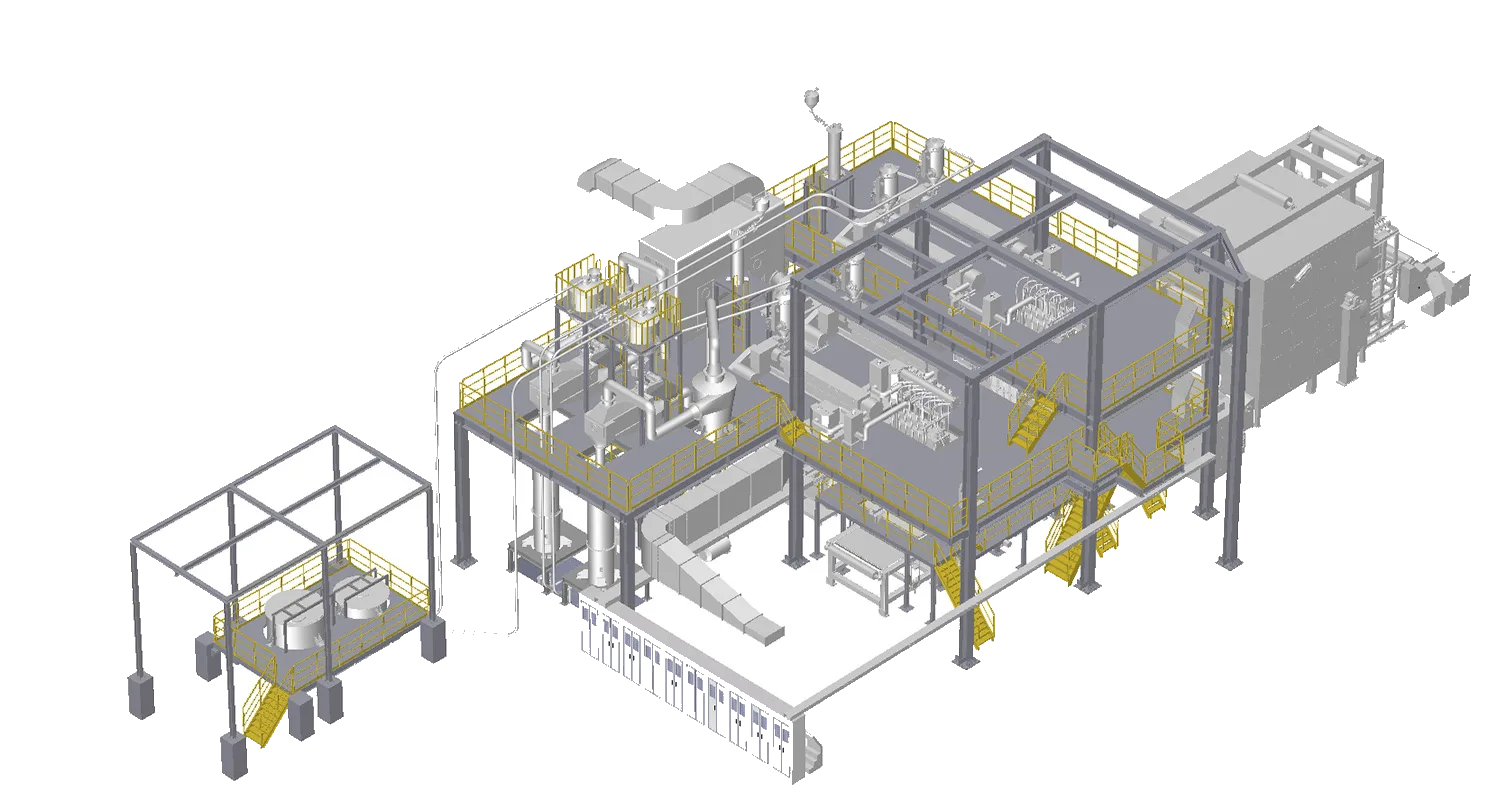
While retail buyers focus on the finished bag, the commercial economics of packaging stem directly from the fabric manufacturing process, the core engineering expertise of Vina Nonwoven:
- Polymer Formulation: High-melt-flow polypropylene (PP) resin is blended with anti-aging stabilizers and colored masterbatch pellets in computer-controlled gravimetric dosers.
- Extrusion & Spinning: The polymer is melted at 200°C–240°C in heavy-duty single-screw extruders and pumped through high-precision spinneret dies containing thousands of micro-orifices.
- High-Speed Drafting: Molten filament streams exiting the die are chilled by laminar airflow and drawn at supersonic speeds via aerodynamic suction drafting chambers, aligning the polymer chains for maximum tensile elongation.
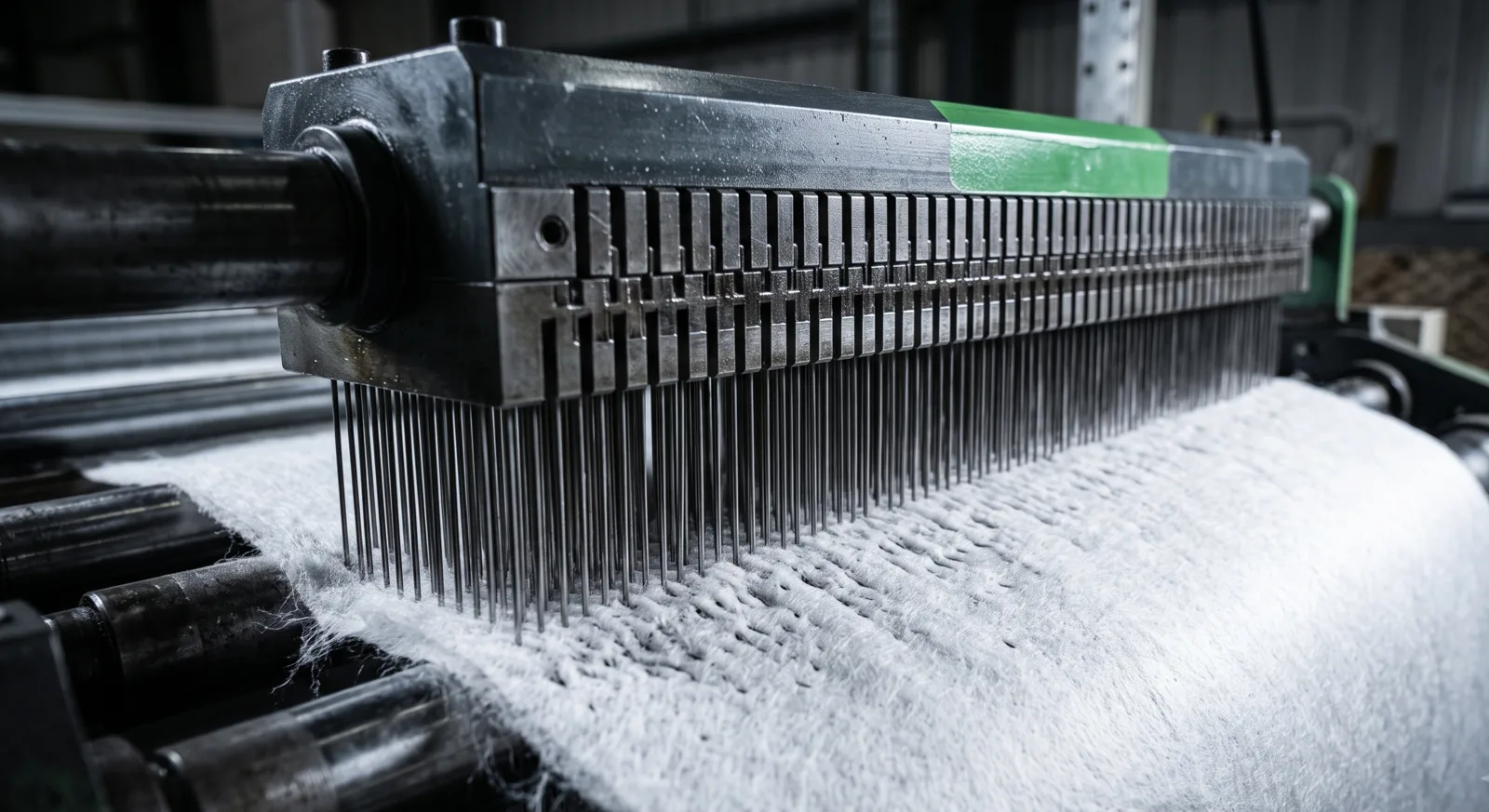
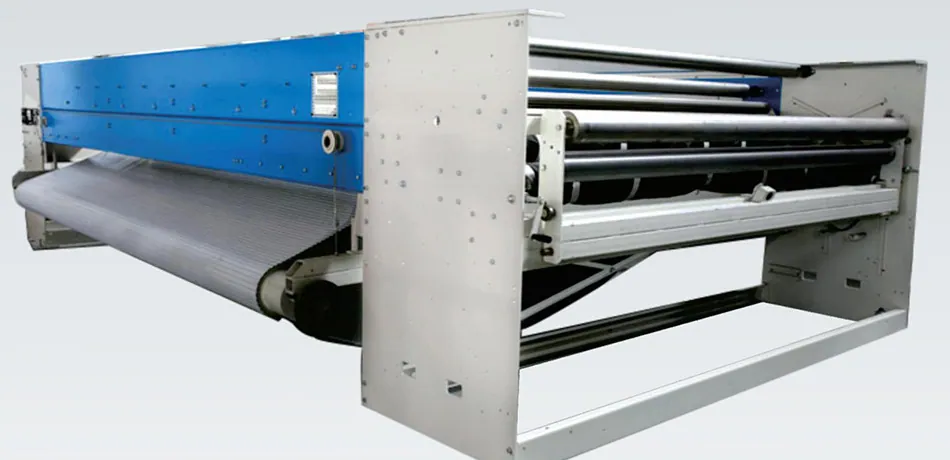
- Forming & Calender Bonding: The continuous filaments drop onto a continuous vacuum-forming conveyor belt, forming a loose, uniform web. This web enters a heated two-roll thermal calender, where an engraved patterned roller applies heat and pressure, welding the filament intersection points into a coherent fabric sheet.
- Slitting & Winding: The consolidated non-woven web is edge-trimmed with rotary knives and wound into large rolls spanning widths from 1.6m to 3.2m, ready for bag manufacturing converters.
For technical deep-dives into spunbond machine configurations and industrial comparisons, explore our guides on Spunbond Production Line Architecture and Working Principles and Needle-Punch vs. Spunbond Technology Comparison.
8. Summary & Strategic Insights for Packaging Businesses
Non-woven bags represent a proven, scalable, and environmentally sustainable packaging medium that bridges the gap between disposable single-use plastic and expensive traditional cotton canvas. Understanding GSM weights, ultrasonic vs. stitched assembly, and printing options empowers businesses to source custom-branded bags that balance aesthetic distinction with budget efficiency.
For packaging manufacturers, bag converting factories, and industrial investors in Vietnam: establishing domestic non-woven fabric manufacturing capacity via dedicated Spunbond production lines provides tremendous operational advantages over relying on volatile fabric roll imports, ensuring supply security, customizable GSM specs, and competitive raw-material costs.
Vina Nonwoven is the premier distributor of advanced Spunbond nonwoven production lines and Zhentai needle-punch machinery in Vietnam, offering comprehensive machinery supply, certified OEM spare parts, on-site commissioning, and engineering maintenance services. To discuss production line capacities, machinery specifications, or plant setup requirements, contact our technical team via hotline +84 786 877 888 or email vinanonwoven@gmail.com.